I started my studies in 1959 at the first School of Journalism in Chile affiliated with the University of Chile.
I had really great professors. People that have been and were journalists and had practiced what they were teaching. The only condition that should be obligatory for a University professor is “never teach something that you have never put in practice.” But it seems common to all of the Universities in the world to hire people, who have just graduated with a degree, to teach subjects they have only read about.
Ramon Cortez Ponce taught us Introduction to Journalism. He told us that “journalism is the history of today”. He said that Matthew, Mark, Luke and John were the first reporters. He taught us that their Gospels were examples of the best written journalism. They told the facts from different points of view, but the same facts. Their Gospels have lasted forever without change even when translated to other languages. Ramon Cortez was one of the founders of this, the first School of Journalism in Chile in 1953.
Professor Manuel Bianchi Gundian taught us Universal History and kept us fascinated with the history of different religions like Buddhism, Hinduism, Islam and, of course, his amazing knowledge of World History in general. He was an Ambassador for Chile in several countries and President of the Inter-American Commission on Human Rights of the Organization of American States. He obtained the United Nations Human Rights Award in 1968.
Juan Honorato behaved not only as a gentleman but his attitude made us really understand what informative journalism was all about. His emphasis on ethics and respect for “the truth” made in a me a tremendous impact. Such, that today, it is very difficult for me to watch news on TV or read them on the internet. The principles I learned from Don Juan Honorato are not respected today! Juan Honorato was the First Chief of Information and Communications of the Comptroller General of the Republic and co-founder of the School of Journalism.
Erica Vexler taught us how to write great attention-grabbing articles without any bias, just using good writing principles and objectivity. She was a graduate from the School of Journalism and an excellent journalist not only in Chile but also in Mexico. She obtained several awards. For Televisa (Mexican company) she did interviews with political celebrities in several Middle East countries. In Chile she was one of the pioneers in the investigation of a Nazi Colony in Chile. Authorities ignored all journalistic efforts denouncing the atrocities taking place in “Colonia Dignidad” and it took almost 40 years, and enormous efforts, to unearth the mysteries of this infamous untouched enclave under the direction of Paul Schäfer, a known Nazi and pedophile. The Colony survived well after the military coup in Chile in 1973.
Mauricio Amster was another co-founder of the School of Journalism of the University of Chile. His firm and demanding Graphic Arts classes were the most excellent example of great teaching. He taught us typography hands-on. He was born in Poland and his parents died in the Belzec extermination camp. He lived in Spain and later migrated to Chile from France. He practically, single-handedly, changed the history of book design in Chile. He greatly influenced the renovation and evolution of graphic art both in Spain and Chile. (Every time I remember his name I smell newspaper ink.)
Mario Planet, with is warm and affable personality taught us Informational Journalism. He was first a professor and then Director of the School of Journalism from 1962 to 1972. After the military coup in Chile he was exiled in Argentina. He also was the Dean of the Faculty of Social Sciences of the University of Chile. I received my title (degree) as a Journalist from his hands in 1962 after finishing my thesis.
Journalism studies, at that time, took four years. These were the subjects for each year:
First year: Introduction to Journalism, Spanish Composition, Universal History, History of Journalism, History of Chile, Elements of Literary Culture and Geography.
Second year: Informational Journalism, Spanish Composition, History of Journalism (second level), Legislation, Sociology, Psychology, Graphic Arts (typography) and Universal History (second level).
Third year: Informational Journalism (second level), Journalistic Writing, Universal History (third level), Social Psychiatry, Economics and Public Opinion.
Fourth year: Informational Journalism (third level), Audiovisual Journalism, Graphic Journalism, Comparative Journalism, Advertising, Legislation and Journalistic Ethics, Economics and Public Relations. English courses were also provided during the four years.
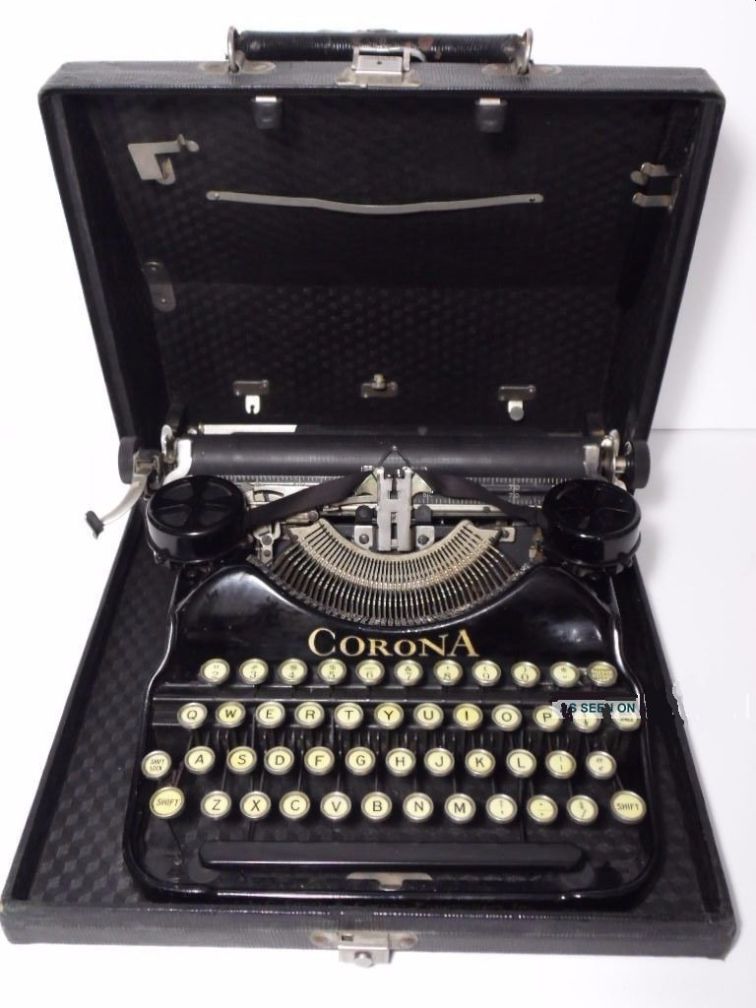
My mother had the excellent idea to make me take typing classes during my vacations between the two last years of high school. So I would take notes in class, type them on the Smith Corona typewriter that my father had brought from Europe in 1929 and give them to my classmates. One of my classmates took good notes also. So, we started combining them for the typewritten copies and distribute them to our classmates. I don’t remember if we charged or not for the notes but I suspect we didn’t.
While I was studying, in 1960, I also got my first job selling ads for a tourist guide that was going to be published by the Deptartamento de Transporte, Seccion Propaganda y Turismo, Santiago, (Propaganda and Tourism section of the State Railways enterprise) and with big press coverage. After all, it was the first tourist guide of Santiago as far as the publishers knew. The text was written by Oreste Plath. Its real name was César Octavio Müller Leiva and he considered himself “a traveler researcher”. He was famous “folclorologo” or folklorist, professor in several Universities. (Biblioteca Nacional de Chile:000466508)
I think that I was quite successful in selling ads. Some were full page! I was very happy with the check I received. I carefully thought on how to spend it and I decided to give a surprise to my parents, so went to a store and I bought a month provision of their favorite gourmet treats and liqueurs.
In 1962, during my last year of studies, I was selected among other students to cover the 1962 FIFA (Federation Internationale de Football Association) World Cup in Valparaiso. There I had the opportunity to meet some great soccer players as Pele and Garrincha from Brazil and I had a flirtation with a medical doctor from Czechoslovakia. Georgi was a passionate communist.
When I asked him if he had thought of leaving his country and be free, he said: “Why would I even want to do something that I know I cannot do?”
By the time the tourist guide was published (1962) I had been accepted and was doing my practice at one of the tabloid size newspapers in Santiago, “La Segunda”. I was in charge of writing the obituaries. I was only “an apprentice”.
In 1966, I submitted my thesis to earn the degree of “Periodista” or Journalist” at the University of Chile. The title of my thesis is “Base de Estudio para la Creación de un Periodismo Infantil,” which translates to “Study Base for the Creation of Children’s Journalism.” (Beltrán, 1966)
The research, statistical analysis, and thesis writing spanned several years. The objective of this study was to advocate for the introduction of news content for children across television, radio, magazines, and newspapers. The aim was to enhance children’s understanding of the world they would encounter upon completing their education. To illustrate the necessity for journalism targeted at children, I conducted a survey involving 1,529 participants aged between 9 and 14 years. This sample size was statistically representative of the population of children attending both private and public schools during that period. I visited a total of 47 schools to administer the survey. The questionnaire consisted of a single-page document with 10 questions. I compiled the results using a Remington Rand tabulator with punched cards, as computers were not accessible at that time. Each perforated card corresponded to a questionnaire, with the holes indicating the responses. Although the process was labor-intensive, it proved to be more efficient than manual entry. To my knowledge, I was the first university student to request the use of the Remington Rand Tabulator from the “Servicio Mecanizado de la Subsecretaria de Transportes” for research purposes.
The Remington Rand Tabulator allowed transportation companies to handle large volumes of data related to routes, schedules, and passengers. This facilitated planning and operational efficiency. Also the tabulators were used to keep accounting records, calculate income and expenses, and manage payroll. This was especially important in an industry where financial accuracy was crucial.
The findings of my research were quite intriguing. Children indicated a preference for sports and work-related news as their primary choice, followed by topics concerning the country, religion, international affairs, and finance. They favored obtaining news through newspapers and radio, as television was not yet available in every household in Chile at that time. The most recent news they had learned about pertained to domestic politics. The majority reported learning about the latest news via the radio. However, many did not fully comprehend the news they heard or read due to the presence of difficult vocabulary. They expressed a preference for humorous, musical, or western-themed programs on radio and television. Additionally, they enjoyed reading stories and comic books. Ultimately, they preferred listening to news rather than reading it.
In the conclusion, I provided recommendations on how to write news for children. I earned my degree in Journalism with “distinction” in 1967.
 An Ear by Mistake
You must be logged in to post a comment.