Like anybody coming from a farm or small town, Clarita, upon arriving in Santiago, wanted to live in a neighborhood near downtown. But Floro’s apartment was in the Mapocho neighborhood.
It was a joy for Filomena to visit the nearby historic Mercado Central (Central Market). She delighted in admiring the handmade pieces of art and seeing other artisans, and then continue to the colorful area of various greengrocers that give life to the market. Clarita and Filomena often took their lunch in this cozy place, tasting the gastronomy of the sea at Mercado Central’s restaurants–paila marina (sea food soup served in a ceramic dish), machas a la parmesana (parmesan clams), or caldillo de congrio (Chilean bass soup) were some options that they favored at lunch time.
(My parents also enjoyed taking me to that Market to eat fried fish with a watercress salad at Don Simon’s restaurant. Don Simon would give me a very small cup, adorned with tiny flowers and containing white wine, that, as a child, was a special delight. Much later I learned he did not have a license to sell wine so he could not serve the wine in a glass, especially to a child.)
Clarita was not happy living in Floro’s apartment for several reasons. One was that she was jealous of Floro’s first wife who was the original owner of the place. She suspected that his memory of her would make Floro less attentive to Clarita and her kids. Second was that she wanted to have a better social position, and it was not good to have to admit that she lived in the Mapocho neighborhood. That was not the place for a person aspiring to be at least “middle class”. Third was that she wanted to have her children in better schools and those schools were in better neighborhoods.
So she kept insisting to move to Las Condes or at least Providencia neighborhoods and leave Floro’s apartment only as an office for the trucks. In fact, Floro’s property included a huge lot enclosed by a tall white wall with barb wire on top and two doors on each end. One large door was for the trucks and the other, a small green metal door, opened directly onto a hall which was the entrance to the apartment building. The lot had an enormous patio with a garage and all the needed equipment to maintain and service the trucks.
Finally, Floro decided to please Clarita and started looking for another house. He could rent the house in Mapocho to the mechanic, in charge of the trucks, and his family, and provide a chauffer for Filomena and the chickens’ truck. Filomena, of course, would move with them. So the new house would have to have a separate apartment for Filomena.
The search started in March one year and it was going to last a very long time.
Clarita and Filomena went to every house they could find in the newspaper. They did not hire a realtor mainly because they didn’t believe any person in that business would really understand what they needed.
However, the way they finally found a house was through a church.
A guy from England, who frequently rented Floro’s trucks, was talking to Clarita, while waiting for Floro to prepare a truck for him, and asked her where they went to church. She said they have been visiting several Catholics churches but she was not happy with the mass being in latin. Since he knew they were looking for a house in the barrio alto (higher neighborhood), he asked Clarita if she would like to visit the church he went to. The services were in Spanish or English depending on the time. It was an Anglican Church.
Clarita thought that going to a church which also had services in English would give her better status and promptly accepted the invitation.
Filomena was not even aware of what Anglican Church meant and accepted to go with Clarita and el gringo (every English-speaking or blond person in Chile are considered “gringos”) to a new Church. (My aunt’s nickname was “la gringa” because of her blond hair. Also, my mother was called “gringa” by some of her friends. Although her official nickname was Coca (and I was her Cola). Cola means tail in Spanish.)
The first thing Filomena noticed was the lack of saint statues. The service was obviously not a mass and Filomena was distracted by the nice dresses on the ladies attending church. However, she liked the preaching in Spanish about how to love one another, following the teaching of Jesus.
Clarita was happy to meet other ladies her age and the fact that they had a nice young women in charge of the children while they attended the service. Antonio, Clarita’s son, was already eight years old so he could attend Sunday School. Dolores, Clarita’s daughter, now 12 years old, met some nice looking boys in her Sunday School class.
The third time they attended the Anglican Church, one of the ladies in a group that Clarita and Filomena had joined after the service just to chat, said that some missionaries had been called back to England and they had to sell their house in a hurry. Clarita immediately asked for more information. The lady took her to one of the bulletin boards hanging on the wall, and there was a picture of the house, the address and the description.
Promptly, on Monday, Clarita called and asked to see the house. Clarita, Filomena and Floro went to see the house located on a street very near Providencia Avenue and with nice old trees that provided great shade.
The house had four bedrooms, three baths, a wonderful kitchen and a separate wing with a bedroom, a bath, a kitchenette and a deck overlooking the pool.
Clarita and Floro were delighted, and so was Filomena, thinking she could even cook at pleasure in her small kitchen.
The most amazing thing was the price. Since the owners were pressed to leave in less than a month, they needed to sell to the first interested person. So Clarita got her new house in the “proper” neighborhood.
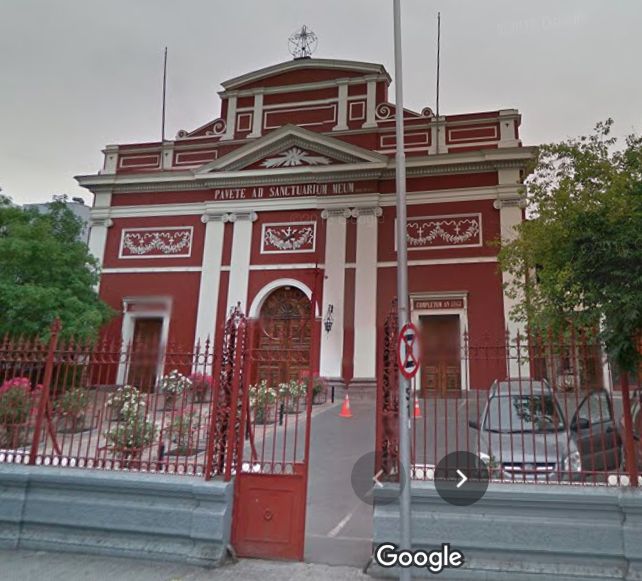
Filomena insisted that she had to pay the “manda” (promise) she had made to San Antonio and Santa Rita (the saint of the impossible) for finding the right house. So in spite of liking the Anglican Church, Filomena asked Floro and Clarita to take her the next Sunday to the Church of San Antonio de Padua, in the Yungay neighborhood, riding in her truck with the chickens. But Filomena still needed to go again to the San Agustin Church to pay respects to Santa Rita and the Christ of May.
 An Ear by Mistake
You must be logged in to post a comment.