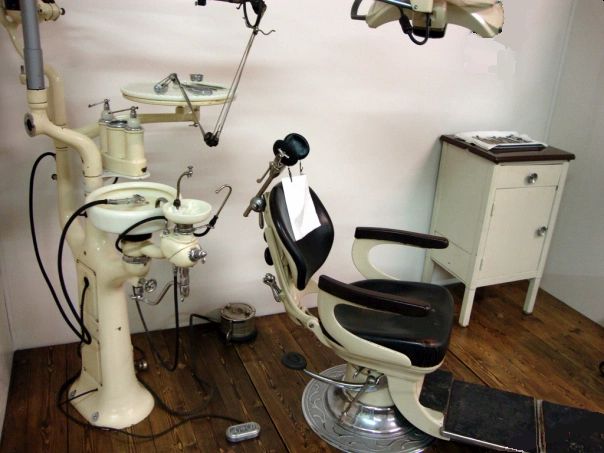
Dr Pedro Beltran was born on a farm on December 3 or 4, 1903 or 1904. He said he was born at midnight so the day was not precise. Also his father waited a year or two to go register his birth and nobody is sure if he got the year right. There had been two babies before him, but they died before they reached a year of age.
My grandmother blamed her milk for her babies death, so she hired a Mapuche woman to feed my father. Later in his life when my father did not get gray hair he would proudly say “It is because of the Indian milk.” However, my mother and I did not get gray hair either.
As a child, father had to work at the farm but my grandmother insisted that he had to go to school. So at 10 years old he started getting up very early, hopped on his horse, and rode for at least an hour to arrive at the school on time.
As soon as he came home from school, he had to help in the farm until it was time for dinner at 8:00 pm.
At school, he rapidly showed preference for mathematics and his teacher said he was university material. That was a joyful and bitter surprise for my grandparents. University courses were expensive.
To continue his high school, father had to go to the city of Concepción where his aunt Celmira, the sister of my grandmother, took strict care of his proper social education, together with his studies.
At 17 years old, my father, with his high school certificate of completion, took a train to Santiago, the capital. He went straight to the School of Engineering at the University of Chile where he had been accepted after he passed the admission exams.
He remembered being late for his first class so the professor picked him for the first question. He jotted an algebra equation on the board and said: “Let’s see what this country boy coming late to class can do.” Father stepped down from his seat in the classroom, took a piece of chalk, and without hesitation solved the equation and said: “This is what this country boy can do, and notice that I even left my spurs outside.”
He got to be a good friend with that professor, but his engineering studies did not last long. He received a letter from his mother telling him that a distant relative of the family that lived in Nuñoa, a neighborhood in Santiago, wanted to meet him. So he went to have tea with that distant aunt and to his surprise, she offered to pay for all his studies. However, she had one condition. He would have to study dentistry and not engineering. Father told her that he would have an answer for her soon after he finished his first year of studies.
With his good grades, it was not difficult to transfer to the School of Medicine. Of course, there was no way to say ‘no’ to this aunt’s offer. “Oh well,” he thought, “I will build bridges in mouths instead of roads.”
By that time all students of dentistry had to take all the courses at the School of Medicine for the first two years, and then continue with the Odontology School courses. The School of Odontology was created in 1888 in Chile and was dependent on the School of Medicine. Father graduated with the title of Dentist Surgeon. However, he and several of his classmates were called by the Army to perform their duties taking their Servicio Militar Obligatorio (Compulsory Military Service).
In 1900, Chile was the first country in America to establish this compulsory service in the Army under the influence of the German leaders (Prussians) hired as instructors to form every young Chilean man. However, because they were students at the School of Medicine, the Army accepted them as lieutenants, and they didn’t have to share quarters with the regular soldiers.
Later the Army offered my father, as a graduated dentist at 23 years old, a special commission to travel to several countries in Europe and specialize in maxillofacial surgery, studying in England, France and Spain. So in 1927, my father embarked on a ship that took 30 days and 9,400 nautical miles from Valparaiso to Portsmouth in England.
The two years of my father’s studies concentrated in the art of repairing deformed and broken jaws. Because of the First World War, sadly, the military doctors in those countries had acquired vast experience in this field.
Father had learned English at school in Chile and some French from his family of French descendance, so he did well, not only in his learning trip, but also in social encounters.
In Europe, he had the opportunity to meet great surgeons and even members of royal families. He had an interesting story of dancing with the Royal Highness Infanta Beatriz of Spain, when he was attending a social event in France, and committed a funny language mistake in French that provoked the laughter of the other dancers. He said in French “Sorry, I might have peed on your toe.” instead of “Sorry, I might have stepped on you toe.” I completely understand because pisar (to step) in Spanish could easily and wrongly be used as pisser in French.
The Infanta Beatriz and her sister took nursing classes, helping twice a week at the Red Cross in Madrid from 9 am to 1 pm and from 3 to 7 pm. Beatriz was president of the Red Cross in San Sebastian, working there during the royal family’s summer vacation.
On the trip back, father met a Canadian, Bracy Wilson, who offered him a job with the Royal Bank where his father, Morris W. Wilson had a high position.
Of course, my father instead, continued back to Chile. After two years sharing what he had learned in Europe at the School of Odontology, he left the Army and opened his own clinic, with the help of his aunt, in Nuñoa’s neighborhood.
There is where he met my mother in June 1930.
My parents married on June 29th, 1931, and fully experienced the economic depression.
They moved to a small apartment in downtown and, since people were so short of means, they didn’t go to the dentist. So my father, in spite of going against all his principles, had to borrow money from a lender.
Soon after things turned to be more normal, my parents did all kind of penny-penching efforts to return that money. My father made a promise to my mother that that was not going to happen again.
They spent many years in the first part of their marriage as editors of the Journal of Odontology of the School, where my father dictated a course in Prothesis.
My mother also helped him at the reception and administration of his clinic for many years. And she assisted him in some difficult surgeries, as I also did later.
Father was a member of the Rotary Club, and he was greatly involved in it. One of the big missions of the Club where he belonged was to provide wheel chairs to handicapped. My father created a Rotary Club in the town where my parents moved after they left the farm in Colchagua. Mother, and later I, participated in many social functions of Rotary Club.
Father also had his heart set on helping the people in the countryside, in Colchagua, that could not afford to go to a dentist. For at least 30 years, he would take his medicine bag and ride a bus on Fridays to my grandparents farm, open his improvised clinic all day Saturday, and come back on the bus on Sunday mornings. Some times my mother would go with him, until she become pregnant with the first baby which they later lost.
My father did not want my mother to go with him during the weekends anymore because of the tiring bus rides, but mother convinced him to buy a car. So they bought a brand new Ford with four doors. They enjoyed the car, going on many short trips around Santiago and some longer trips to the island of Chiloe where mother was born.
However, they had an accident, and father sold the car and promised never to risk the life my mother again. This was until, between my mother and I, we asked him to buy me a Fiat when I was 15 years old.
When father was 71 years old, he was diagnosed with prostate and bladder cancer. Since he didn’t believe in buying insurance, they had to sell the clinic he owned downtown to be able to afford doctors, surgery and radiation treatment.
Father then installed his clinic at home, in what used to be our dinning room, and he keep assisting his clients until his heart failed ten years later. The doctors then told him that he needed to move to a place at sea level. Santiago is at 2,297 feet above sea level in the area where my parent lived.
I was living in Texas at that time, since getting my PhD in Austin. So I moved from Texas to Florida, at sea level, so my parents could live with me in Miami where the best Heart Hospitals are. Father lived 15 years more than he was supposed to, according to the doctors’ prognosis. He even had another bout with cancer in Miami. Mother and I were very grateful for the Cancer League in Miami. They help us through the whole episode, and father survived.
Father died on October 14, 2000, at 96/97 years old, after I had moved my parents to an Assisted Living facility. My heart was broken but my job demanded me to travel often and for up to two or three weeks. After my mother had a fall and fractured her hip and femur, they were not able to stay alone at my apartment anymore while I was traveling.
To the last minute, father preserved his humor making jokes about walking on one leg because the doctors had ordered amputation of his right leg. He had developed gangrene in his leg because of his bad circulation and diabetes, due to the food at the assisted living facility. I had just left the Hospital where he was when they called me back. It was 3:00 am. Miami was flooded due to a big storm, and it took me at least an hour to return to the hospital, with my car flooded up to the seats. When I arrived, my father had just expired.
 An Ear by Mistake
You must be logged in to post a comment.