When my father was preparing his dissertation to graduate as a dental surgeon he had a very interesting puzzle to solve. His theme, I believe, was on the maxillary deformation produced by cleft palate or something similar. A theme like that required an in depth study of the intraoral and extraoral anatomy of the dental and maxillofacial structures.
In order to study the maxillofacial area of the body he had to include the bones of the forehead, face, cheekbones and the soft tissues.
The only way to do that was to have access to a lifeless body an dissect it.
Father had a interesting personality. He was quite introverted but could become a soft hearted charmer when the occasion called for that. So during his years at the School of Medicine he had formed an authentic and long lasting good relationship with janitors and service people. That relationship helped him enormously when preparing his dissertation.
He have told Joaco, one of the janitors, that he needed a body to study the head bones. Joaco communicated with his pals and, since at the School of Medicine there were always some cadavers for the professors to use, he managed to make one available for my father to disect.
My father knew not to ask how Joaco have done it but he assured him that the body would not be missed.
Father carefully took all the skin and the muscles, the eyes, the tongue, etc., taking meticulous and abundant notes. When he arrived to the point that only the skull was left he was stuck. In order to study the bones he needed to separate them without breaking them.
The skull has 22 individual bones, 21 of which are immobile and united into a single unit. The 22nd bone is the mandible (lower jaw), which is the only moveable bone of the skull.
The question was how to separate the bones connected together by ossified joints, also called sutures.
Joaco who enjoyed helping during the anatomy classes also helped my father who stayed up to early hours if the morning working on his cadaver.
Obviously Joaco shared what he was doing so late at the school with his family.
One day Joaco came to the classroom where my father was assisting a professor and pull him out. Joaco was very excited.
He knew how to separate the bones thank to his mother-in-law. When she came for a visit the night before and he started telling about the dilemma of separating the skull his wife Carmela was not happy to talk about that at dinner time. But her mother, “la Chepa”, have worked at a butcher store for a while and she said she knew how to do it.
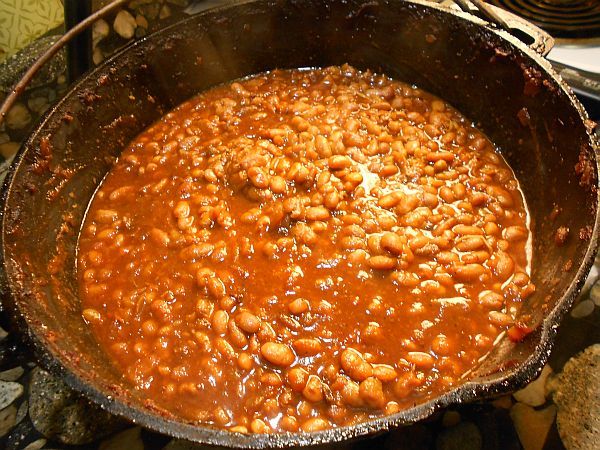
So Joaco took the skull home that evening and the next morning he brought it back inside a large pot. His mother-in-law have filled the skull with dry beans and put it on a pot at low temperature adding water every hour or so. The beans, that expand 3 or 4 times when you soak them, did a great job in softly separating the sutures and the bones came apart without damage.
Father obtained is degree and his dissertation erned him a special commission from the Military to study in Europe.
Father thanked Joaco and his family bringing them several samples of the best food he could find and transport from England, France and Spain.
 An Ear by Mistake
You must be logged in to post a comment.