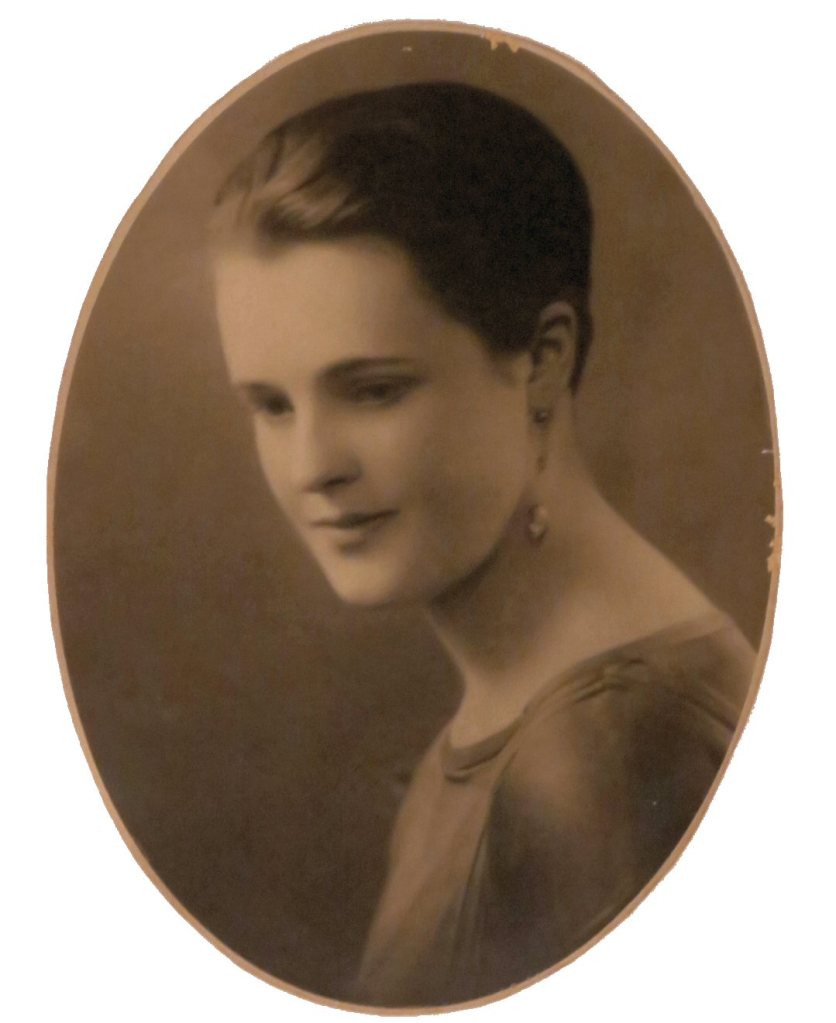
Mother was born Maria Beatriz Antonieta Peeters Andrade. My grandfather was a physician from Belgium. My grandmother was the daughter of Jose Andrade Huidobro and Albina Moss Douglas. Both of the parents of my great grandmother Albina were from Scotland.
My mother was born on the Island of Chiloe, Chile. Chiloé was one of the last Spanish strongholds in South America. It only became part of the Chilean republic in 1826, 16 years after the First National Government Board in Chile was established to fight for independence and, also, after many battles.
From 1895, lands were given to European settlers and also to large industries like seafood and fish canneries. Cannery machines were the specialty of the father of my grandmother. He even invented some of the procedures for canning seafood. His methods enabled the cans to last for years without spoiling.
Mother remembered the house in Ancud, the capital of the island at that time, as a huge house with a roof that allowed her and her sisters, to jump from one rafter to another. That memory was so deep in her mind that it was the only thing she talked about when dementia started affecting her at 94 years of age.
Mother was very pretty with hazel eyes, and so were my aunts Fanny and Lala (Laura). She had amazing memories of the Chiloe Island, which I was privileged to visit several times and enjoyed all the places she talked about. I especially enjoyed the churches in Chiloe, famous because they were built without nails and in such a way that they resisted the strong winds, earthquakes and storms without damage.
When my grandparents moved to Santiago, my mother was about 14 or 15 years old. She loved drawing and painting, and her thinking was quite modern for the times. She remembered being one of the first to get a hair cut that was totally audacious. The hair cut was called “pibe” which is the word they use in Argentina for a young boy.
At 17 or so she decided to make some money and she started selling adds for a magazine. She was very succesfull.
Mother enjoyed art and was totally impressed and influenced by the Art Deco movement that started, in 1925, with the Exposition Internationale des Arts Décoratifs et Industriels Modernes in Paris. Chile’s culture has always been more influenced by the fashion and art in vogue at the European countries, and Art Deco took only months to be a success.
However, in music the twenties were totally wild and dancing was an expression that promptly reached Chile even when in Chile we never have had “prohibition of alcohol”. That would be almost a crime against the wine industry! Even without the underground speakeasies, dance music laid the foundation for what would become classic standards in all parties in Chile. The “Charleston,” the “Black Bottom,” the “Shimmy,” the “Foxtrot,” and the “Lindy Hop” turned Chileans crazy.
Mother was invited to all the parties of her married sisters and had the opportunity to show her skills in “Charleston”, Shimmy” and “Foxtrot”. She enjoyed dressing as a “Flapper” and hurting the hearts of many high society boys who attended those parties. She was even engaged to a very well known “hijito de su papa” (little boy of his father) but the engagement didn’t last long and she threw the engagement ring at the feet of her “fiancee” in a very well attended party in the city of San Felipe where my aunt Fanny lived at that time.
In 1929, some girlfriends of my mother told her about this dentist, just returned from a long stay in Europe, who was handsome, well dressed, and very well educated. One of the girls had an appointment with him and the other girls planned to accompany her just to meet him. Mother was also invited, but she discovered that her friends “forgot” to pick her up that day so she decided to go anyway by herself to the dental office.
She said that when she arrived the attendant welcomed her. She asked if her friends were there and the attendant opened the door of the examination room trying to let her in. In the moment the door was opened the dentist saw my mother and he stopped working. My mother saw him and according to her version “her heart stopped”. He introduced himself and immediately asked if she could stay after the examination of her friend was finished. She did and he asked her if he could go and visit her that night.
She accepted and he went that night to see my mother. He introduced himself to my grandparents and my uncle and told them that very night that he knew he wanted to marry their daughter. That was my father.
My grandfather was surprised and amused at the “guts” this young dentist showed. My grandmother was not happy at all because to her he was an “indio feo” (ugly Indian) since he was not blond. After the introductions and his astonishing statement, my father was told by my grandfather that he could continue visiting my mother but with one condition. He must come to dinner every night and accompany them on their weekend trips for a year. If that lasted and he was in agreement with the condition, then he could ask for the hand of my mother.
I still have some pictures of the times my parents were “dating” by going to different beautiful places with both my grandparents or only my grandfather and my uncle. They went to fish on the rivers near Santiago. To the beach in Valparaiso. The mountains in Las Conders and many other really fun places.
Exactly one year after the “deal”, my parents were married on June 29, 1930. That was also the day the Catholic Church celebrates St. Peter’s Day and my father name was Pedro (Peter).
Then the depression came, and the young couple lived through very difficult years, trying to survive in a small apartment in the middle of downtown Santiago. My father had moved his office there to have more clients. But with the depression, teeth were not a priority, and people didn’t go to the dentist. However, they managed to keep the cook and maid they had hired when they moved downtown. They did not have the heart to fire them due to the circumstances. So they managed to survive with a loan from a lender.
Mother got pregnant and promptly had a miscarriage. That was followed by another miscarriage some years later.
After the depression, my father became a popular “dentist” (actually, an oral and maxillofacial surgeon) and performed many incredible jaw and palate operations. This opened the opportunity for him to become a professor at the School of Odontology. Mother worked with him at his office as a dental assistant and also helped him to edit the Journal of Odontology which he started, based on the Journals he have seen in Europe. He also worked for a while at the Emergency Hospital in Santiago, but he was asked to leave because the other dentist could not perform at the same speed as he. Mother was happy when he left the Emergency position because he did not come home some time until early hours of the morning, just to take a shower and continue working in his office.
When mother moved from Chiloe to the capital, she only had 4 years of high school because at that time women were not allowed to go further in education. However, right after the depression quit affecting their economic situation, she started taking independent courses in philosophy and psychology at the University of Chile. She also took classes with her Aunt Esther, the sister of her mother. Her aunt was a well known dress maker in Santiago where all the high society women used to go for very, very expensive handmade wardrobe. She made many of her dresses but had a weakness for hand made shoes. I remember going with her in a bus to see her shoemaker who would patiently measure her feet and make her select the leather and the sole materials for beautiful shoes. I have never seen again such good quality and look in shoes as those. When I was a teenager, I also got some shoes from this wonderful man who was really an artist at his craft.
After 11 years, my mother got pregnant again, and against all odds, I survived. We both have RH negative blood. That changed the life of my parents. Because of the trying circumstance of her pregnancy with me, mother became weak for several months. They put me in the care of a “nanny”. I was one of the first “formula” babies, they said, fed only by a bottle. Mother did not have milk.
During my first years, I was raised, as we say in Chile, as a “piece of butter” or “between cottons”. My parents were very concerned about my health, and surely enough, I had almost all the childhood sicknesses you can imagine, except typhoid fever. However, those sickness came only after I started school. Between my birth and 6 years of age, when I was sent to parochial school, I enjoyed traveling with my parents and going to restaurants. I was treated as an adult. I remember when I was two years old going to the restaurant Oriente, right under our apartment in Plaza Baquedano, and ordering oysters, bread with butter and a glass of white wine. The bartender was amused, and every time he saw my parents carrying me to have my “aperitif”, he would call the waiters so they could see me ordering and having my oysters. My father would open and cut the oysters for me while he would have his Manhattan and some shrimp or clams or other seafood, and my mother enjoyed the oysters with me. My parents also would take me to San Antonio, a nearby port, to the seafood market where we would buy lobsters coming from the Robinson Crusoe Island. These lobsters are really big with tails measuring more than 10 inches. When we wanted to have a typical Chiloe dish, my mother would buy clams, mussels, razor clams, picoroco barnacles and other delicious seafood needed for a Curanto.
A Curanto is an authentically Chilean dish that originated on the Archipelago of Chiloé. Following my grandmother’s tradition, this meal was made by digging a hole about 1½ yards deep, filled with red hot stones that were heated in a bonfire, and then adding a good assortment of seafood, beef, chicken, lamb, different kind of sausages, potato bread (called milcao), and vegetables. The food was then covered with nalca leaves or Chilean rhubarb, and then covered with wet sacks. The process takes about one or two hours, and then the food is ready to enjoy.
However, since we were in Santiago, my mother and the cook would do the pot version of the Curanto, which is not as delicious as the one made in the hole but faster and also very tasty. I was always the first one to eat the clams and the sausages!
Mother was an excellent cook, but she let the cook do the daily meals. Mother, however, would prepare a real feast for the wedding anniversary. That was also the celebration of San Pedro. All the family was invited to these parties that were celebrated each year, and the family was big. The average number of people we had at those parties was about 60. Mother would prepare all kind of pastries and finger food several weeks before the party, while father would kill the turkeys and prepare a lamb or pig to be cooked that day. One or two days before the party, my mother would bake the favorite cake of my father. That became a tradition for this party since the first year they were married, a “torta de nueces con manjar blanco y mermelada de damasco” (walnut cake with manjar blanco or “dulce de leche” with apricot jam). The cake is covered with crushed walnuts and dulce de leche. She also prepared other traditional cakes with white or chocolate “fondant” or icing. I was in charge of tasting all the pastries and enjoyed the remainder of the icing of the cakes.
After I came to United States to study in Texas, my parents visited me several times. They would stay with me sometimes for three or four months during summer in USA and then return to Chile for their summer (southern hemisphere). Mother was especially happy to escape the winter in Chile which can be very cold.
One of the interesting things about my mother was that she loved to rides in amusement parks. The first time we went to Argentina I was 11 years old and my parents decided to take me to a famous funfair Luna Park. Mother was the first to want to take all the scary rides. When she came to visit me, while I was working at a radio station in Fort Worth, Texas, she loved to go to Six Flags and take all the rides, especially the drop from the Superman Tower of Power which stands at 325 feet in the air. Of course, I had to go with her because my father preferred, he said, just to observe.
My parents and I made several trips to Europe and within the United States. Mother particularly enjoyed visiting Scotland and going to see the Edinburgh Castle. She had trouble going up so many steps but she said “this I do for my grandmother Albina.” We visited some friends in Switzerland and my cousins in France. Mother particularly enjoyed the dinner cruise we took in a Bateaux Mouche in the Seine River around Paris. She also had lots of fun going to the Moulin Rouge and seeing the “can can” which she had told me to dance, together with “tango”. In the United States the favorite trip for my parents was Los Angeles to San Diego which we did by car and took three days to complete staying in darling bed and breakfast places for the nights. Father fell in love with the fresh market in Los Angeles and mother enjoyed eating all kinds of seafood and fish.
When I learned, after many attempts, that I could not return to Chile, and my father’s doctors recommended that he live at sea level, I convinced my parents to move in with me. I became a citizen of the United States, with prime priority because of my degrees, in 1985, and shortly after that my parents took the citizenship exam and they passed with flying colors.
Mother really enjoyed living in Miami and then in Texas, after my father died. In Texas, we went all over the state looking for blue bonnets, azaleas and rhododendrons during the springtime and enjoyed going to the lakes around Dallas during the summers.
At 94 years, mother developed dementia and I sadly had to take her to an assisted living facility. She resisted at first, but finally, when I found a place near my home so I could visit frequently, she liked the place and enjoyed her big window in her room. I used to take her out to eat until one day she said she did not want to walk so much. She survived six more years and died at 100 years and four months of age.
I was in the middle of a trip to teach at a seminar in Peru, so I learned about her death on the phone. She had died during her sleep. My dear friend Karelin took charge of the situation and arranged for my mother’s body to be transported to a cemetery in Miami Lakes (then Hialeah) in Florida, where my father was buried, and have the funeral one week later so I could be there when I returned from Lima. We had a beautiful ceremony. Many of my friends in Miami attended, but the only member of my family who was there was the son of a cousin of mine.
The last words my mother had said to me were that she wanted to “fly to see the Lord”.
 An Ear by Mistake
You must be logged in to post a comment.