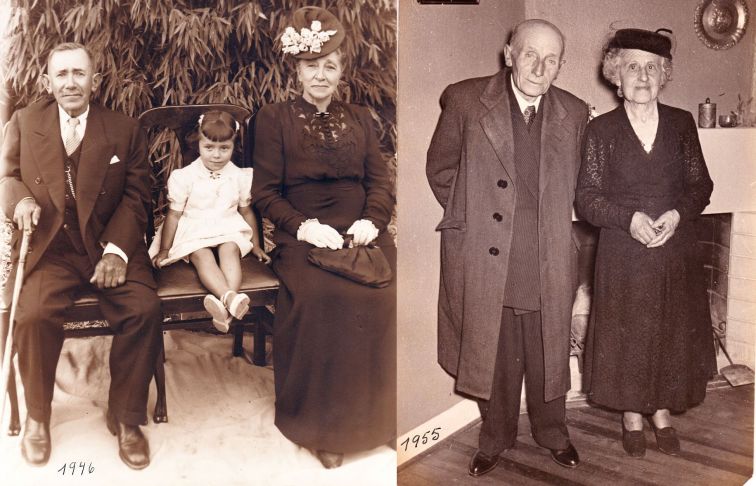
The first thing I remember about my paternal grandmother was accompanying her to milk a cow. She was a tall and handsome woman with green eyes and a cute little hair bun and a very strong sense of duty.
From having the breakfast of my grandfather ready at 5:00am, to baking the bread for all the workers that will eat it at lunch time, to milking the cows, feeding the animals, (sheep, goats, pigs, chickens, rabbits) to planting and taking care of vegetable and flower gardens, killing a chicken to prepare a cazuela for lunch, her morning was always full.
Some days after milking the cows, she would make cheese, which is a long process.
After serving lunch to the family and all the workers, she would wash the dishes, utensils, pots and silverware and take a small siesta, but not before placing a kettle on the brasero. (large metal container that holds burning coals) to be ready for onces (tea time).
After her siesta, she would take same time to work on her bolillos (bobbin lace) knitting which she would carefully keep to be prepared to give them as gifts to family and friends.
Gorgeous ribbons, lace collars, necklaces, dollies and even tablecloths would my grandmother Hortencia produce using her little round bolillo pillow and what, to me, seemed like hundreds of threads hanging on wood bobbins.
Some days my abuela (grandmother) would take all the rugs in the house and hang them out. She then would take a big long bat and beat each rug until all the dust was gone. She always wore a mask and old clothes to do this and as soon as she had finished putting back the rugs in their corresponding places, she would take clean clothes and either go to the estero (stream) near the house or to the bathroom, after it was built at the farm house, and take a long refreshing bath.
By onces time, the family would sit around the brasero and grandmother would be back at the kitchen preparing slices of hot bread with butter and honey or orange marmalade and/or smashed avocado to offer us. She would also carefully fill the cured mate (pronounced something like “matay”) cup (gourd) with half yerba mate and poured hot water from the kettle sitting on the brasero. After one or two minutes the mate would be circulated among us to take a sip or two. The mate would be filled again and, since some of my cousins liked the mate sweet or with milk, my grandmother would use other gourds to please each taste.
Yerba mate is a well know diuretic so soon we would have to take turns to use the outhouse. It was great when the bathroom was added inside the house!
My “abuela” would then rinse the mates with water, no soap of course, dry them very well with her muslin kitchen towels and put them up side down on the shelves near the brasero.
In fact all the glasses and cups in Chile are kept upside down because usually the mouths have a broader surface than the base and it would resist the daily tremors.
After the onces, grandmother would prepare the packages for the workers. Each went home with a big galleta (big kneaded round flatbread of about 8 inches diameter by 1.5 inches tall made with lard), some fruit (apricots, grapes, peaches, apples), a small cheese, some beef jerky or a piece of ham and some tomatoes, carrots, celery, asparagus, or beats depending on the season.
By dinner time my grandmother was preparing her delicatessen while grandfather and I would get an appetizer made of hot bread, butter and very hot chile pepper (aji verde or cacho de cabra). Before each dinner, the family would usually have a pisco sour and some canapes, petit bouches or my grandmother’s exclusive amuse-gueule and then the salad, the soup, the main dish and the dessert. All these topped with a home-made brandy and the agüita perra for digestif. (agüita perra is an infusion made out of a medicinal herb like mint, boldo, bailahuén, poleo, and boiled water mainly drunk without sugar.)
My grandmother would then go to read in her private sala (small room next to her bedroom) after washing, drying and putting away all the kitchen and dinnerware used for dinner and taking care of all the food and utensils she would use next day for breakfast. She would spend some time reading and then go to bed.
She never allowed anybody of the family to help in her kitchen unless it was a special occasion with lots of guests. (She had her kitchen help and she did not want her daughters to bother her.) For special events, she would send somebody to fetch the wives of some of the workers to come and help her for a day or two. They would go home after the occasion with a good amount of food and money compensation.
My grandmother’s origin was unknown but her family name was predominantly Gallego and Basque from the north of Spain. However, I discovered years later, that the way she killed animals and cooked was totally kosher. One of the favorite stories of my paternal family was to tell us, the grandchildren, that the ancestor of Abuela Hortensia was a famous bandit from Central Chile, Jose Miguel Neira who had a band of highwaymen but he was an effective help during the struggle for independence from Spain, fighting unceasingly against the Spaniards. However, after the independence, the Patriots ignored Neira’s help and he returned to his life of crime. He was captured, judged and shot in 1817 at 42 years old. His descendants migrated to the south of Chile to the area where my grandmother was from.
————
The mother of my mother, Abuelita Haydee was some character. The first thing I remember about her is how strict she was with her grandchildren.
I remember once when I was about 3 years old she came to visit. It was raining and I was sitting on my bed pretending to read an illustrated book.
She came to greet me but then when she saw me sitting on my bed she said, “Beds are for sleeping and you should keep them neat all day”. She pulled me off by one arm and proceeded to fix the bed. She left my room pulling me by one arm to the living room and told my mother to teach me to stay off of my bed.
I still don’t understand what that was about but I seldom sit on my bed. She also opposed eating with one hand on your lap. The proper way to eat was “with European manners”, with both hands visible above the table, managing the fork with your left hand and the knife with the right hand. When I went to US I discovered that the polite way to eat was with the hand you don’t use on your lap. Go figure.
My grandmother was petite with black eyes and hair and very white skin. She would always stand with a pose that communicated “I’m here and don’t you dare forget it”. I remember going to visit my grandparents when they lived at the small parcela (rural residential property) in Carrascal, and when my grandfather would spend time in the garden or feeding the chickens, she would ask me, “What do these chickens have that I don’t? Emilio spends way too much time with them.”
She was also a very hard worker in the kitchen like my Abuela Hortencia. However, Abuelita Haydee had a maid that also helped in the kitchen. My grandmother liked to prepare desserts that were the delight of the family. I can still feel the taste in my mouth when I hear the word almendrado. Fortunately, it is not a very common word to hear around me anymore.
The almendrado of my grandmother was a dessert made with finely ground almonds, made with rose water, egg white, confection sugar and a dash of vanilla extract.
Grandmother was raised to live in high society as a companion of a French countess who lived on the island of Calbuco in Chile. She had refined taste and enjoyed being the wife of a prestigious medical doctor in the island of Chiloe. However, she carved her own destiny when she convinced my grandfather to move to the capital of Chile, Santiago. She went from being a highly respected person in the capital of Chiloe to a totally ignored person in the capital of the country–from being the head of a lion to being the tail of a mouse, as we say in Chile.
However, she never gave up and she behaved always as the “grand dame” she was brought up to be.
When my grandfather could not drive anymore because of his age, my grandmother would ride the buses in Chile that were always crowded. However, she always managed to force the distance with other passangers by skillfully handling her hat pin. She, of course, would always wear a proper hat, “even to bed”, as my grandfather used to tease her.
Grandmother would import coffee from Brazil and grind it herself in her green coffee grinder. She drank an average of 17 cups of coffee a day. When suffering from arteriosclerosis at age 70 she was taken to the doctor and he recommended to take no more coffee. She said “I rather die” and kept having her coffee until her death at 87.
Abuelita Haydee raised her only son and last child Emilio, dressing him as a girl until he was 5 years old. My mother and her sisters were afraid of him becoming an effeminate guy but, at 5 years old, he took off his skirts and announced, “I’m not a girl and I will never dress like this anymore. I would rather go naked.” Scandalized, my grandmother took him to buy pants and a suit, and through his life, my uncle demonstrated that his early years, dressed as a girl, produced a very “macho” man, and he never doubted or questioned his masculinity. Before he got married he was rather known for his adventures with ladies. He was very handsome blonde and good with words.
Grandmother had two sisters living in Santiago. One was a cloistered nun and the other a well-know dressmaker among the high society Santiaguina. Through her well known dressmaker sister, my grandmother had the opportunity to mingle with society, but my grandfather did not appreciate them, and it was a constant struggle between grandmother’s ambitions and grandfather’s desire to be left alone.
Grandmother was always complaining that her son did not come to visit her enough. My uncle lived in the main port of Chile, Valparaiso, and had a very busy life being the owner of a car garage and helping the Navy and a University to maintain highly complicated machinery.
Once when my parents had one of their famous anniversary parties on June 29th, my grandmother arrived early and went to change her dress on the second floor. When she was changing, she heard the bell ring and then the voice of my uncle, surprising us all by coming to the party. My grandmother was so excited to hear him that ran down the stairs, fell, and broke her hip. That put her in a cast from her chest to her knee and she was forced to spent 4 months in our home while under strict medical surveillance. The doctors told her to be prepared not to walk again. But she said, “Watch me!” and at the end of the 4 months she was walking again and riding in buses with her hat pin in hand.
 An Ear by Mistake
You must be logged in to post a comment.