“Let us all rejoice in the Lord, for our Savior has been born into the world.”
With this, the communion at Rooster Mass was started.
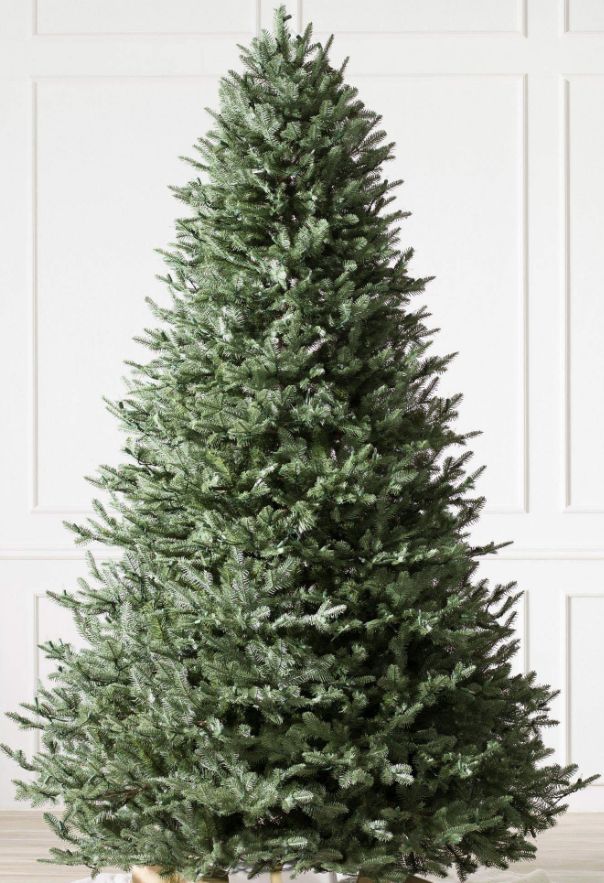
Our Christmas tree was installed every year in the music room. We would push the piano out to the living room, and place it against the wall, as far as we could from the fireplace. I never understood why because Christmas in Chile is in the middle of the summer. In those years, the average temperature rarely reached more than 85 Fahrenheit. We didn’t need to light the fire at all.
My father would very carefully select the tree. He would bring a measuring tape with him. One of those rigid, folding ones that have several pieces about 20 centimeters long and then folds so you have a thick bundle to carry around. He would look for a special kind of pine tree. I’m pretty sure that it was a Balsam Fir because it had evergreen leaves and its fragrance would fill the whole first floor of the house. The tree was placed on a metal base that kept it firm and erect, moist, and hopefully cat proof.
My mother’s decorations were lovingly crocheted, and I still have some of them. Angels, snowflakes, little animals. Some “guirnaldas” (garlands) were made of round colorful aluminum candy wraps saved during several years and joined together with a fine thread. Some of these garlands were made of aluminum wraps in the shape of little bottles made just by preserving the shape of the chocolate candy filled with liquor that we enjoyed after dinner. To preserve the shape of the bottles we filled them with cotton. Some other garlands were made of light blown glass in different shapes. Those, they say, had been sent by our relatives in Belgium. Of course, mother also was sure to surround the tree with white and red tinsel garlands. We then fluffed up pieces of cotton to simulate snow and placed them carefully all over the tops of branches. Many little toys were hung all over the tree. I clearly remember a plastic pink baby with red wool diapers knitted by my mother, and a cat extending its paw to play with one of the glass ornaments covering the empty branches.
Tiny candles held by shiny metal clips were carefully placed, away from the cotton, in at least 24 branches of the tree and lit about 10 pm on December 24 or “Noche Buena” (the Good Night).
Chileans call Santa “Viejito Pascuero” (meaning Little Old Man Christmas). According to what my Belgium grandfather told me it was Saint Nicholas. In the European legend, Saint Nicholas arrived at the ports of Belgium by boat from the Spanish coast accompanied by his page, known in Flemmish as “Zwarte Piet” (Pieter the Black). The two spend the night of December 24 going house to house to give gifts to children who throughout the year have behaved well. Apparently, Chilean artists decided to give Saint Nicholas a more local appearance and dressed him in red, riding a horse and wearing a poncho and a “huaso” (Chilean cowboy) hat, and called him “Viejo Pascuero”.
Mother would start several weeks before Christmas to make the steamed plum pudding. It was wrapped in a cloth towel and hung until Christmas for the flavors to seep through the mix. The process was taught to my mother and her sisters by my Scottish great grandmother. Also she made the traditional Chilean cookies covered with white icing, that my paternal grandmother taught her to make. Rum balls with walnuts inside, crunchy “mani” (peanut) bars with “manjar blanco” (something like peanut brittle with “dulce de leche”), and many other delicacies. The one thing that my parents bought every Christmas was the Pan de Pascua which is very similar to a Panettone but much harder. We started eating this bread much before the Christmas night.
After going to church for Misa del Gallo (Rooster Mass) at midnight, we would come home, find gifts surrounding the tree, and have a traditional dinner. The Rooster Mass: Pope Sixtus III introduced in Rome the custom of celebrating a nocturnal vigil at Christmas, at midnight, “mox ut gallus cantaverit,” (following the crow of the rooster) which was the Roman tradition of the beginning of the new day.
The main course for the night of Pascua at my home was goose, often garnished with chestnuts, lobster, and the plum pudding with brandy sauce. Naturally, before and after dinner, we had the traditional chilled drink called “Cola de Mono” or (Monkey’s Tail), made from coffee, milk, Pisco or brandy, cinnamon, cloves, nutmeg, and sugar. During the meal we drank the wines paired to each dish. For the salads and lobster, we usually had white wines and for the goose, pinot noir. After the dinner we proceeded to open the Christmas gifts.
I got my first bicycle when I learned that the “Viejo Pascuero” really didn’t exist. So, I asked my father for a bike.
Why is the word “Pascuas” used in Chile instead of Navidad (Christmas)?
The word Pascua is derived from the Hebrew word “Pésaj”, and the English cognate, “paschal”. Both refer to the Jewish Passover, a commemoration of the Israelites’ liberation or Exodus from enslavement in ancient Egypt led by Moses in the 13th century BC. In Hebrew “Pésaj” literally means “to pass over”. It mainly refers to the angel of death passing over all the Jewish houses, whose doorposts were covered with the blood of an innocent lamb, sparing the life of their first born. But the first son of all Egyptians including Pharaoh’s, were killed. Finally, after many plagues, he allowed the Jews to depart from Egypt toward the promised land. Therefore, it commemorates the passage or liberation of the Jewish people from Egypt and it is celebrated in the month of Nissan or March-April.
Over time, the term Pascua became the word to refer to various Christian festival days in general. Pascua de Resurreccion, or Easter; Pascuas, for Christmas; Pascua de Los Magos, or Epiphany, which was the visit of the Magi to Jesus traditionally celebrated January 6; and Pascua de Pentecostés, for Pentecost, commemorating the coming of the Holy Spirit to the early Christians, a day observed seven Sundays after Easter.
Note: When Dutch explorer Jacob Roggeveen was sailing the South Pacific, he “discovered” an island on Sunday, April 5, 1722, which just so happened to be Easter that year on the Christian calendar. Thus “Easter Island” which is the Chilean Island of Rapa Nui.
The tradition of “Felices Pascuas” congratulation for Pascuas during the Christmas holidays in Chile arises from the symbolism of Jewish liberation and the birth and resurrection of Jesus Christ the lamb killed to liberate us, all people, from sin. It’s only a matter to recognize Jesus’ sacrifice and resurrection for you to be resurrected from darkness and receive a happy and abundant eternal life. May this Christmas be the day you are born again, if you are not and receive the best gift ever.
 An Ear by Mistake
You must be logged in to post a comment.