On our way from the airport in Tuxla Gutierrez to San Cristobal de las Casas, the driver of our car told us that several pastors who were traveling together to attend a meeting had been stopped and killed on that same route.
One of my many trips to train missionaries and natives to translate the Bible using a computer took place in the town of San Cristobal de las Casas in Chiapas, Mexico. Several members of the organization I worked with went on that trip, including two graphic designers, another computer trainer and several translation scholars who was helping projects in the region.
Since the early 1980s, thousands of Tzotziles and other natives, including followers of liberation theology and evangelicals, had been expelled from their lands by traditionalist authorities. This was a form of political control. In the past, a third of this area’s population, which is the largest in the region, has been forced to abandon their properties and possessions, all due to political or religious disagreements with municipal representatives.
The first to be expelled were around 200. They were accused of being evangelists and burning saints. The first big expulsion took place in 1974. Between that same year and 1976 the mestizo population was forced to flee from San Andrés Larráinzar (also known as San Andrés ‘”Sacamch’en de los Pobres”) to San Cristóbal de las Casas. Starting in 1980, expulsions due to religious conflicts continued.
Despite the situation, many indigenous groups and missionaries working on the Bible translation to those languages came to attend the training. We were amazed to see the wonderful colorful costumes of the women. Most of them were dressed in a colorful blouse or long white overdress (huipil), an indigo dyed skirt (enredo), a cotton sash, and a shawl. They were assigned to prepare the food for the event. Most men wore dark jeans, a blue or brown shirt and a dark vest. They wore boots and a sombrero. Some, the older ones, wore a long waistcoat in black or white sheep’s wool.
The translation consultants conferred and worked with some of the different groups. Another girl, who was also trained in computers, and I taught other groups of natives. They were interested in learning how to use computers and the software programs necessary for translation of the Scriptures to their native languages.
There are 13 ethnic groups in Chiapas. Akatecos, Ch’oles, Chujes, Jakaltecos, K’iches, Lacandones, Kames, Mochós, Tekos, Tojolabales, Tzeltales, Tzotziles and Zoques. However, most of the groups being trained were Tzotziles because they lived in that area.
During the morning of the first day of training, we noticed that the attendants were only men. They seemed very serious and not willing to give us feedback when we were asking for it.
When lunchtime came, we were shown to several long tables. When we saw the men we had been training at one table, we approached it with the intention of sitting with them. However, one of the missionaries called us very fast and told us to go to another table.
We sat and greeted the people at the other table and started eating. Then we saw that the women, who had been cooking for us, came near the table where the men were and sat on the floor and started eating near them.
Intrigued, I asked the people at our table what was going on. They told me that that was the tradition of the Tzotziles. They didn’t allow women to seat and eat with them at the table.
Obviously, that gave me a big clue about the attitude of the men during the training. We were women. We returned to the afternoon classes and some of the men finally opened up and asked questions. They were very impressed at how quickly they could do some things with the computers and talked among them in their language quite enthusiastically.
The next day we started the training again, and the attitude of the men had obviously changed. They were asking questions and learning easily what we were teaching.
At lunchtime, we went to the same table where we had been before, but one of our students came and invited us to their table. They wanted to tell us something. Very seriously the man that seemed to be in charge said, “We have come to the conclusion that since you know so well how to work with these machines and teach us, we can consider you both as men and you can eat with us because you have the knowledge of a man.” Another man later told me, apologetically, that they also had many questions, so they needed the extra time with us at lunch.
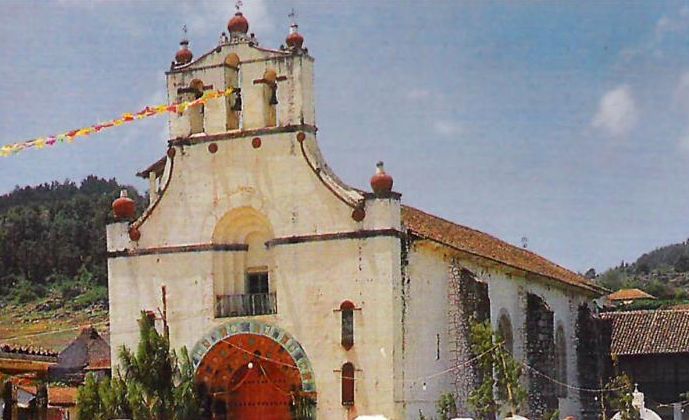
During the weekend, we were told that we had a special tour, and they took our group to San Juan Chamula to visit the church. This was an eye-opening!
This town has more than 500 years of history of multiple rebellions and revolutions taking place there. It is the most highly concentrated town of indigenous people, almost 99%, and all still speaking their indigenous Tzotzil Maya language. It is also completely autonomous from the Mexican federal government.
From outside, the church does not look very different from other Catholic Churches in Mexico. However, as soon as we went in, I felt a very uncomfortable sensation. I felt my heart biting fast. Another girl, one of the graphic designers in our group, came closer to me and took my arm. “I feel very strange here”, she said, “I don’t like it.”
We both knew that something very, very dark was present in that “church”. We both wanted badly to get out of there, but we didn’t want to get separated from the group either, or to offend anybody. So, arm in arm, we continued inside the “church”. We were forbitten to take pictures or even take a camera with us. There was a big fine for doing so.
The “church” was full of smoke, incense and fumes from candles and strange out-of-tune guitar music and off-key singing probably in Tzotzil.
The walls were full of images of Catholic Saints. Each image was holding a mirror or had a mirror hanging around the neck. Their eerie faces stared blankly at us. Our faint reflection looked back at us through each small mirror.
People were lighting thin tall candles to the saints. Each candle was placed on the floor or on a table or on any available surface. The persons lightening the candles were waiting until they all burned and melted.
The church did not have any pews and the floor was covered with pine needles and something like moss. In fact, the floor looked really dirty with the branches and the candles melted in front of the images and chicken blood.
My heart totally jumped when I saw the image of Christ at the altar hanging from the cross. They called Christ, San Juan Bautista, instead. It was a very creepy sorrowful image full of marks in the face and body.
The place was full of people on their knees or just lying on the floor under the effect of the “pox”, pronounced “posh”, which is a liquor made from Mezcal and is up to 50% alcohol. Mezcal is a distilled alcoholic beverage made from any type of agave plant.
Most people going to the “church” were apparently sick, and they were there looking for healing. Some men or woman dressed in white, the shamans or curanderos, were attending small groups of people. Most of the people were given Coca Cola and other sodas to drink.
We saw also on the floor eggs and chickens whose necks had been snapped or were destined to be killed.
We were surrounded by women whispering prayers, men playing music, chickens screaming, and firecrackers that startled us.
When we left the church one of the missionaries explained some of what we have seen, but not much.
The Coke is given to the sick for them to burp and expel the evil from their bodies. They also believe that the potent alcohol creates a passage from the regular world into the supernatural world more easily. Also, the burn they feel in their throats is a sign that the sickness has been cured.
I also was told that during the ceremonies performed by the persons dressed in white inside the church, the disease or illness from the person is transferred to a chicken or egg. That is why the chicken must be killed. In fact, they believe that any evil energies or sins are passed into the chicken and released from the human “patient” as the chicken dies and the shaman or curandero performs the sacrificial offering.
The Tzozil belief is that if their souls leave their body when they are praying, they will be reflected through the mirrors on the saints and be able to return back to their body and to their rightful place.
The mirrors not only ward off evil but represent portals to the supernatural underworld. The Tzotzil belief is that the use of cameras could interfere with this portal due to the mirror inside the camera.
Inside the church there are no confessionals or priests. The mirrors are like a own self-confessional. They think that they are seeing and knowing their own sins as they look at their reflection in the mirror. I’m glad I did not see anything but my blurred face because of the dirty or defective mirrors.
The truth is that the Chamulas (the local Tzotzil people) were subjugated by the Spanish in the 1500s. However, the spiritual conquest did not take at all. Catholicism could not triumph over the Mayan religion and its deities and, as in many other cultures in Latin America, the Catholic Saints were given the identity of an existing god in the Tzotzil religion. We also were informed that Chamulans believe that saints (previously their own gods) are Jesus’ siblings, and they pray to different ones according to their specific needs.
Syncretism is the fusion of differing systems of belief in one. We learned that it was the Mayan god Ajaw who took the appearance of San Juan Bautista.
I left San Cristobal that time thanking God that His Word was being translated into Tzotzil, and I still pray for that culture to come to the Lord.
Ephesians 6:12
For our struggle is not against flesh and blood [contending only with physical opponents], but against the rulers, against the powers, against the world forces of this [present] darkness, against the spiritual forces of wickedness in the heavenly (supernatural) places. (“Ephesians 6:12 – Amplified Bible” 2019)
 An Ear by Mistake
You must be logged in to post a comment.