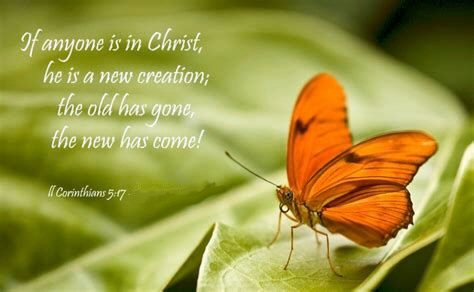
It was interesting to me to be a new person in Christ. Suddenly I could see how my life had evolved from my childhood to a teenager and then adulthood, obviously always protected by God.
My memory of knowing that God was there, through the ray of sun hitting my baby playpen, is still vivid. So I ask myself, how did I loose that and end up being a rebel, not wanting to believe in God at all? I think this is what is happening to the young people of the world today, only it is even more dangerous than when I was young. I never felt “dominated” by an evil spirit which is obvious today. But I certainly was influenced by evil spirits in my life before knowing Christ.
During my early school years, I was definitely bullied by some of my classmates. I gathered that the cause of that was the difference between social classes so characteristic of the Chilean society.
My father, being a maxillofacial surgeon and dentist, had definitely become only middle class. Because of his origins as the son of an almost illiterate but bright farmer, to be considered middle class was a real accomplishment. Of course, his last name was not among the high society last names and he didn’t marry a socialite either. My mother was the daughter of a foreign medical doctor, not well known outside of a small island of Chile.
Father belonged to the Rotary Club, but he never accepted an offer from the Masons to become a member of a Logia. Even when he received several invitations by colleagues and friends.
Those social “accomplishments,” or better, “traditions,” were obviously important in the eyes of my classmate, a second grade girl being trained, maybe not purposely, to be exclusive and self-righteous in her own eyes. All because of the social category she belonged to. Also, she had blond hair and green eyes!
So she bullied me because I didn’t belong. I responded to her words and pushed her with a real good shove, and she hit her head on a patio sidewalk. Of course, that brought me a lot of trouble among the nuns. Obviously, the daughter of a very rich owner of one of the most important department stores in Santiago was not a student to ignore even when she recovered from the fall pretty fast and there was no need to call the medics. I was reprimanded by the nuns and, of course, my mother.
When finally the nuns told my mother that “I didn’t have the character to be in a parochial school,” I was glad. But, at the new school, I was not accepted either. For the same reason: I did not have the “right” parents.
All my classmates were daughters of people with the “right” last names and big fortunes, or at least who pretended to have money. Most of their parents were divorced. Also many of the girls complained about having too many uncles “visiting” their mothers or aunts “visiting” their fathers. They did not get too much attention from their separated parent either and almost no attention to their childhood needs. I was usually surrounded by classmates that cried too much.
Also, during my high school years, I attended a religion class offered in my high school as an optional course. In this class I was subtlety indoctrinated by a priest who lived in a shanty town and had leftist ideas.
Once at the University, I felt, if not welcomed, at least accepted. I participated in lots of activities outside the classroom. I sang in a choir, I helped to organize big parties for different occasions, participated in student meetings, got a boyfriend, etc. I also became more and more aware of the social injustice in Chile and, without becoming a member of any political party, I definitely liked and studied socialist and communist ideas.
But then, as a journalist, I was very impartial and to the point--never ever expressed my opinions in any of my articles. I was well trained to “tell the facts”. Contrary to the reality of the press today that only publishes opinions or are paid to say what a certain group wants them to say.
When I continued my studies in the U.S., I realized how unfair was the racial situation in Georgia. Martin Luther King was really active. I was in Georgia when King was assassinated in Memphis, Tennessee, and reported about his funeral in Atlanta on April 9th, 1968. “The black masses,’ I said, speaking on the radio, “of more than 150,000 people that flocked to Atlanta for King’s funeral, formed a wave on the streets of Atlanta, chanting, ‘We shall overcome,’ on the way to the cemetery.”
Also, these were the end of the 60’s, and university students were going to Vietnam. Girls were getting pregnant because their boyfriends were going to war.
After receiving my Masters, I returned to Chile. There, my political ideas, while I was teaching at the university in the North of Chile where the copper mines are, became stronger. After Allende became the President in the 1970 elections, things started to change. Allende was a Socialist, while being himself a wealthy medical doctor, with strong opposition from the privileged classes in Chile and other countries, mainly the United States. He was assassinated at the Presidential Palace (some versions said that he killed himself) on September 11, 1973.
My world was totally turned around, and I realized that what happened in Chile, with its long trajectory of being a democratic and well educated country, could happen anywhere.
I applied then to continue my studies at a university in United States. I was accepted, and in four years, I obtained my doctorate and remained in the U.S.
After that, while working on an educational project, I met Christ.
This time my life really changed. I started to see, as I said, how God had always been present at every moment of my life.
The challenge now was this “new creature” and “new life”. First, I didn’t “experience” anything more dramatic than not desiring to smoke anymore and I stopped saying curse words. More than that, I really didn’t have any Biblical preparation, and the churches I started going to were not interested in telling members what a “born again” Christian really was.
I was baptized by a Presbyterian pastor at a beach in Key Biscayne, Florida. All the ladies in swimming suits that attended the ceremony were very exited, but none told me what the real meaning of submerging in water was. I either don’t remember my first baptism by sprinkling at a Catholic Church because I was too little or maybe the ceremony of my first baptism did not impress me at all, because I do remember other happenings in my life when I was very little.
Attending that church truly changed my perspective on “rich people.” I was invited to a lovely “ladies tea” at the home of one of the most affluent and well-known families in Miami. When I arrived, a woman in a black uniform with a white apron opened the door. Her features made me curious if she spoke Spanish, and she confirmed that she did. After I greeted everyone and was introduced to the ladies, I was told I could head to the kitchen if I wanted a cup of tea.
In the kitchen, I found the same woman who had opened the door, and I was thrilled because I wanted to chat with her. She was a Q’anjob’al from Guatemala and had faced persecution from her government, alongside many others from her community. A devoted Christian, she sought asylum through a church organization back in Guatemala. They informed her that she needed a sponsor in the U.S. to apply for asylum. That is when this generous family reached out to her, welcoming not just her, but her entire family to come to Miami and live with them. She had children and a husband, and this family even covered their flights and picked them up from the airport. They were also helping them learn English so they could secure their papers and become citizens.
She was so grateful for the support this family provided that she was always eager to lend a hand, whether it was helping the cook or the maids. On this occasion, she took it upon herself to manage the door and serve coffee or tea in the kitchen. This heartfelt and inspiring story truly shifted my view of wealthy people. Given what I knew about the situation in Guatemala in the 80s, I had no doubt about the authenticity of her experience.
I became a paid missionary with an organization that translated the Bible, and my purpose was to convert people to … computers. That is, help the translators to stop using their typewriters and use computers to facilitate the translation and expedite the time taken in doing so. The process was indeed faster, and all the software I introduced in those translation projects certainly made their lives easier, allowing them to check the translation digitally instead of manually.
I met people from different races and religions, investing their lives in these translation processes. Some obviously felt “called” by God to do this. Others, like many natives, were paid to help the translators, providing the correct usage of their languages. Some natives became believers in Jesus Christ during the translation process, and at the end of my time with the organization, many translations were done by the natives themselves instead of by a learner of their language.
All these years of taking equipment and teaching how to use the computers in the translation of the Bible opened a more respectful attitude in me toward people who dedicate their lives to the Word of God. To see some people, enthusiastically applying the text they read in the Bible to their own lives, was an extraordinary and humbling experience.
When I was called to participate in the development of software that would help even more in the translation of the Bible, I was fascinated and honored. This required a much stronger cooperation with another organization formed by faith missionaries. That is, people in that organization have to raise their support to be able to work in the organization. All the software I had been bringing and teaching how to use in the translation projects was produced by members of that organization.
These circumstances gave me the opportunity to interact with other women working for this organization who were really doing what they were doing by faith. Most of the people I worked with were “born again” in the real meaning of the expression.
One of the colleagues I worked with started inviting me to the annual Southwest Believers Convention. I managed to make my trips to Dallas, Texas, for work, to coincide with these meetings that took place during a weekend. At the beginning, I found myself being very skeptical about all the preachers at the conference, but, little by little, God started working in my heart and I saw the light.
All these preachers, starting with the organizer of these meetings, Kenneth Copeland, were ‘faith’ centered. I was, for the first time since becoming a believer, in front of people 100% dedicated to God, not only in the pulpit, but in their day to day activities. And teaching their children to believe like they did!
They were walking “new creations” and what difference that made! I’m in the process of learning everyday how to live a faith-centered life. Praise God!
 An Ear by Mistake
You must be logged in to post a comment.