Since I was a newborn, I had the pleasure of traveling with my parents. They enjoyed visiting all parts of Chile, whether it was the countryside, the mountains, or the beaches. We traveled by bus, train, and boat to any location where we could learn more about our long and diverse nation. I then had the chance to visit most of the Americas, both north and south, Australia, as well as a few nations in Asia and Africa, while teaching Bible Translation teams how to use computers, software utilities and later Paratext. However, it was one country that my heart really wanted to visit.
In 2007 I had the opportunity to go to Israel. For many years I had been praying for an opportunity, but I was afraid the price of a tour would be too high. The tours I saw offered online were, in fact, very high for my budget. However, talking to another girl that worked for my same missionary organization, I learned that there was a couple in Israel who had a program for Bible translators, scholars and pastors, at a house near Jerusalem. They also offered reasonably priced tours during some months of the year when they were not so busy.
The Home for Bible Translators and Scholars (HBT) was a nonprofit ministry providing mother tongue translators and scholars from around the world with the opportunity to have a formal program of study of “the language of the Bible in the land of the Bible”. The main service offered by HBT was a six-month study program in partnership with the Hebrew University in Jerusalem that is specifically designed for Bible translators and consultants.
I contacted the founder of this ministry, a professor at the Hebrew University, Dr Halvor Ronning, and he was able to put together a tour for me and a companion for a very reasonable price. The trip was going to take place in December from the 6th to the 17th. When I talked at church about my possible trip to Israel, Sandra, a lady who taught Precept Courses, also showed interest and she became my travel companion.
We departed from Dallas/Fort Worth airport to Newark, NJ, and from there to Tel Aviv, Israel. After 24 hours of flight, we arrived in Israel on December 7th. Mirja, the cofounder of the HBT Ministry, was waiting for us. She took us to the car and Dr. Ronning drove us to the Home at Mevaseret Zion, Israel, about 5 miles west of Jerusalem.
During the hour that this transfer lasted, I vividly remembered that some of my classmates and other Jewish students at the School of Journalism, in 1967, had traveled to Israel to help during the Six Day War. My friends, the Chilean students, participated in various roles, including combat support and humanitarian efforts. They contributed to the Israeli war effort during the conflict and were received back in Chile with honor. During that time, Israel received military support from various countries, including Chile, where some students and military personnel were involved in training and cooperation with Israeli forces.
The Home was quite accommodating for our needs. Sandra and I shared a room with two beds on the second floor. A girl from Finland was volunteering at the house at that time. She did some cooking and cleaning.
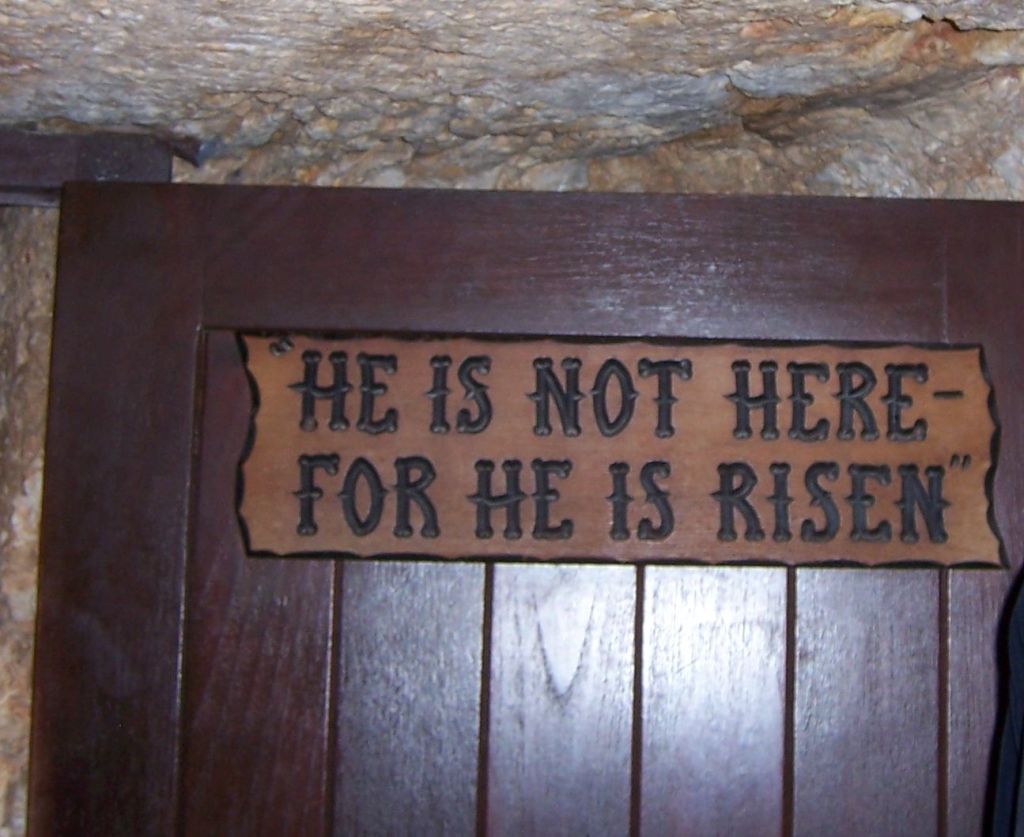
Next day we were taken by a van on our first tour. The first impact was the entrance to Old Jerusalem, we went through the Jaffa gate and then continued to the Armenian quarter. We stopped at the Gloria Hotel to pick up a group of pastors from Africa who were sharing our tour. Continuing in the direction of the Garden Tomb, we saw a Column of Herod temple. At the Garden Tomb, believed by many to be the very location of the crucifixion and resurrection of Jesus Christ, we saw the open tomb and Gordon’s Calvary, which is also considered to be Golgotha (The Place of the Skull). After visiting the tomb, we had a small service led by one of the African pastors. I was particularly touched by the sign on the tomb that reads: “He is not here for He is Risen”. It was also amazing the number of doves there, and the beautiful golden trees with red pomegranates.
From there we continued to the Israel Museum. It was founded in 1965. It contains encyclopedic collections, Archaeology, Fine Arts, and Jewish Art, and features the most extensive holdings of biblical and Holy Land archaeology in the world.
We visited the Shrine of the Book which houses the Dead Sea Scrolls, the oldest biblical manuscripts in the world, as well as rare early medieval biblical manuscripts. It was amazing and humbling to see the length of the Isaiah Scroll.
Adjacent to the Shrine is the Model replica of Jerusalem in the Second Temple Period, which reconstructs the topography and architectural character of the city as it was prior to its destruction by the Romans in 66 AD.
Our final destination that day was the Elah Valley where David confronted Goliath. On the road there, we went by the area of the city of Kiriath Jearim where the Ark of the Covenant may have been moved after being in Beit Shemesh.
For lunch we stopped at a McDonalds at Shoresh. We were visited by one of the thousands of cats that you encounter in Jerusalem. Everybody pets them and feeds them. Guides use the felines to indicate where important ruins are. “Do you see that orange cat on top of that column? There was the house of…”
We continued to Tsor’a , Bet Shemesh and then the Elah Valley where we stopped and learned about the details of how David picked the stones from the brook that was very dry.
December 9th was also an exciting day. We toured the City of David excavations, where we explored inside the Canaanite tunnel. Then we visited the Pool of Shiloah site, and then to Mt Zion where we went inside the Dormition Abbey. We continued to the Holocaust Museum in Yad Vashem, and finally we stepped on the biblical “road to Emmaus” which was a dirt path marked by the remnants of ancient Roman paving stones leading to a Palestinian town.
The next day, December 10th, our private tour started at Mt Scopus and then toward Mt. Olive where we saw the Old Jewish cemetery. It is split in two by a highway that leads to Jericho. On the west of the highway are the older sections of the cemetery that stretches as far as the tombstones of the Kidron Valley. The newer section is located on the Mount of Olives’ southwestern slopes.
Obviously, this cemetery reminded me of Mathew 23:27 “Woe to you, [self-righteous] scribes and Pharisees, hypocrites! For you, you are like whitewashed tombs which look beautiful on the outside but inside are full of dead men’s bones and everything unclean. 28So you, also, outwardly seem to be just and upright to men, but inwardly you are full of hypocrisy and lawlessness.”
We also saw the famous pilgrims Mansion d’Abraham. Full of emotion, we walked among the olive trees where Jesus prayed on the day before the crucifixion, in the Garden of Gethsemane. We visited the Church of All Nations and then walked, in less than 30 minutes, across the Kidron Valley and went inside the city of Jerusalem through the Lion’s Gate. One of the most amazing things about visiting Israel is to realize how small are some distances, how shallow are some valleys and how small are the “mountains”. Some of the African pastors, who were used to seeing Mt. Kilimanjaro, were amazed at the small hills called ‘mountains’ in Israel. I, coming from Chile, was also surprised about some distances and mountains.
We enjoyed going through some picturesque markets and seeing some of the Via Dolorosa stations while walking inside Jerusalem. We ended at Piza Basti restaurant for lunch. There we learned the owner’s family had been there for 400 years. We had a delicious Turkish coffee with cardamom and pomegranate juice with our pizza.
We continued to the Church of Saint Sepulcher where we took multiple pictures. We saw the Church of the Redeemer, went by the Notre Dame Church and ended up at the Damascus Gate, one of the main entrances of the Old City. It was late when we left the city that day.
Next adventure was on December 11 when we started our trip toward the Sea of Galilee. We went to Tel Aviv via Modi’in. This town was mentioned in the book of Maccabees.
We went through the area of the ancient city of Gibeon. According to Scriptures, down this area Joshua chased five Canaanites kings.
Our guide told us that at the time we were there, all land was occupied by Israel, but all the inhabitants were Muslims. We also went by Ne’ot Kedumin which is a Biblical reserve with gardens, vineyards & terraced hills cultivated to replicate the environments of the Hebrew Bible.
We arrived at Caesarea–where we saw the grand harbor, the aqueducts, the amphitheater, and palaces, and enjoyed a wonderful Media show. We also toured the crusaders 12th century fortress. We also saw a virtual reconstruction of Herod’s City, and the Cat’s Quarter there was a treat for me.
After this we went to Haifa. There we went to visit a family who had befriended Sandra by email through a rescue institution. This family, of Jewish origin, had escape from Russia. We had lunch with them.
We continued to Mount Carmel National Park and then Megiddo National Park. Later that day we arrived at our destination. It was a house owned by a friend of our guide at Poria Illit with a magnificent view of the Sea of Galilee.
December 12 was a very special date. We went to Tiberias, and continued to Migdal, where Mary Magdalena was born. Then to the Yigal Allon Center at Kibbutz Ginosar. There we saw a 2000-year-old, 7 by 26 foot long, oak and cedar boat, able to hold up to 15 people. In the boat were also found an oil lamp, a cooking pot and an arrowhead of the Second Temple period—when Jesus was in the Galilee. So, to whom did the boat belong?
We continued through Capernaum where we were to visit later.
After lunch at Birkat Ram restaurant, we headed to Mt. Hermon. We stopped at Banias at the base of the mount in the Golan Heights near a natural spring. This place and the cave on it were associated with the Greek god Pan. Jesus brought His twelve disciples all the way up to the pagan region of Banias/Caesarea Philippi and asked them the questions, “Who do people say that the Son of Man is?” Matthew 16:13, and “But who do you say that I am?” Matthew 16:15. (“Bible Gateway Passage: Matthew 16:13-15 – Amplified Bible” 2019)
We visited the Tel Dan Nature Reserve and the Tel Dan Excavations where we saw incredible archeological evidence of this important area in the Bible.
Then we drove to Mas’ade, a Druze village and we stopped at Ein Zivan which is an Israeli settlement organized as a kibbutz in the northern Golan Heights. Finally, we drove down to Poria Illit again stopping for dinner at HaZor’im.
On our tour on December 13, we spent a good amount of time at the place where Jesus fed the five thousand and where he taught from a boat. Then at Capernaum and the site of the Sermon on the Mount. We visited St. Peter’s Church and the remains of a Byzantine-era 4th Century Jewish Synagogue (The White Synagogue) of Capernaum and also the foundations of a First Century Synagogue.
We continued to Sepphoris, the historic capital of the Galilee, which is 4 miles from Nazareth, and it is probably where Jospeh and Jesus worked as carpenters building houses for Romans.
Then we continued to Nazareth Village on the outskirts of old Nazareth. At Nazareth Village, bible scenes are brought to life by “villagers” who live at the farm and houses, work with the same type of clothing, pottery, tools and methods that Mary and Jesus would have used.
We stopped for lunch at the only Kibbutz in Israel that raises pigs, Mizra Kibbutz, and continued toward Beit She ‘an. On the road we passed by Afula and we saw the walls of the Gibo ‘a Prison. At Beit She ‘an we visited the Scythapolis and the ruins of the amphitheater.
Just before we returned to the Home of Bible Translators we went by Jericho which is about a thousand feet below sea level.
Next morning, on December 14th, we went back to Jerusalem through the Zion gate to the Armenian quarter. There we saw and admired with respect, a map depicting the Armenian genocide which was the systematic extermination of the Armenian people by the Ottoman Empire during World War I, primarily between 1915 and 1917, resulting in the deaths of an estimated 600,000 to 1.5 million Armenians.
We continued to The Burnt House Museum. The house belonged to the Bar Kathros, a Jewish family that produced incense for the Temple. It was burned by the Romans in 70 CE. According to archeological investigations, the house was burned down a month after the Second Temple was destroyed.
Then we continued to the Wohl Archaeological Museum at the Jewish Quarter. The Museum preserves the remains of six houses from the Herodian period, discovered in 1967.
We continued to the observation garden of the Temple Treasures of the temple. From there we could see and then went down to the Western Wall. There at the women’s side of the wall, I inserted a tiny paper note, and the note that my friend Karelin had given me, into a small space between the stones that was already full of other prayer requests.
After the visit to the wall, we continued to the Jerusalem Archeological Park. We also visited St. Peter Gallicantu Church. The church was built over the probable site of the palace of Caiaphas, the chief priest who had Jesus condemned to death. Here are the remains of a fifth-century shrine with Christian markings on the walls, including seven Byzantine crosses. Also, on a lower level there is a network of first-century caves, one of which is known as the Sacred Pit. Here the early Christians believed Jesus was confined on the night before He died, and then the pit where Jesus was held after they flogged him.
On the morning of Saturday December 15th, we went to worship at the Narkis Street Congregation. This church was organized as a Baptist church in 1925 by a small group of Jews, Arabs, and expatriates during the Mandate of Palestine and continued functioning as a multinational and interdenominational community.
After church, we crossed the border from Israel to Palestine and went to Bethlehem where we saw Rachel’s tomb and visited the Church of the Nativity. The church was built in 326 AD after being commissioned by Constantine the Great and his mother, Saint Helena. It was built directly over a cave in the area where Jesus Christ was thought to have been born.
In Bethlehem, we had the opportunity to visit Beit Sahour, a gift store where we found olive wood souvenirs, mother of pearl, and beautiful jewelry.
We did not have any problem at the border between Palestine and Israel at the West Bank.
The next day, December 16th, we headed toward the Dead Sea. It is between Israel and Jordan and about 30 miles long, 9 miles wide at its widest point, and 990 feet deep. The Jordan River feeds into the Dead Sea, which has no outlet.
First, we visited Qumran to see the place where the Dead Sea Scrolls were found. There are eleven caves. Some caves were formed naturally while others were dug out by the Essenes, a Jewish sect that lived in Qumran in the second and first centuries BC.
We continued to where David, fleeing from Saul, hid among the rocks in En Gedi. We briefly visited the place and had the opportunity to witness a fight between two Nubian Ibix males which are mountain goats living for centuries in that area.
We continued to Masada National Park. This was where King Herod built a palace and fortress between 37 and 31 BCE. He wanted refuge from potential uprisals. In 70 CE, after the fall of Jerusalem, Masada became a last bastion for Jewish rebels resisting the Roman rule. During the First Jewish-Roman War, besieged by Roman troops, the defenders chose to take their own lives rather than surrender.
While in Masada, we had the privilege to see many Tristram’s starlings, the black birds that seem to vigilantly take care of every rock in that place.
In our way to our next stop, we saw many camels. We briefly stopped at Tel Arad and continued to Tel Be’er Sheva National Park, near the modern-day city of Beersheba in the Negev region of Israel.
Before returning back to Jerusalem, we visited Bet Shemesh, a center of Haredi Judaism and Modern Orthodoxy.
Our last day in Israel, December 17th turned to be very busy. First, we went through the Dung Gate toward the Temple Mount having the opportunity to see the Western wall again. Out first encounter was with a couple of Muslim soldiers. They were sitting in a corner. One was watching his nails and the other taking a nap while a calico cat was having breakfast on a cottage cheese container that, evidently, the soldiers had given her. They did not even look at us, but the cat did. We saw the Bet Shemesh Mosque, and then we walked around the Dome of the Rock which was closed and the only “windows” we found were so dirty we could not look inside. There was no activity in that area at all.
From there we continued to St. Anne’s Church where the pool of Bethesda was. It is located at the start of the Via Dolorosa. We clearly saw and took pictures of the El-Ghawanima Minaret or tower of the mosque from there. In this location is where the Antonia’s Fortress was. Here Jesus was presented to the crowd for judgement. The Antonia Fortress was built by Herod, the Great, to protect the Temple Mount.
From there, we continued walking toward the City of David. Inside, some remanent sculptures of the Chihuly exhibit, that opened in Jerusalem in 2000, still were there. It was an interesting contrast with the ruins.
And that was the end of my tour in Israel. The flight back home started at 11:40 that night. Next day we were back in Texas.
In time, I have come to realize that my trip to Israel was not a mere physical or intellectual experience. It was a spiritual experience that keeps growing and influencing my relationship with God. Something deeper than understanding changed me. God chose and formed Israel’s people. Through them He gave His Son to bring His message of love to the rest of the world. It is not possible to comprehend that selfless act unless His supernatural nature reveals itself in you.
Psalm 19:14
Let the words of my mouth and the meditation of my heart
Be acceptable and pleasing in Your sight,
O Lord, my [firm, immovable] rock and my Redeemer.
(“Psalm 19:14 – Amplified Bible” 2019)
 An Ear by Mistake
You must be logged in to post a comment.