
From September 13-27, 2010, we took the most amazing trip to Kenya and Zambia, Africa. And then in 2016 from September 2-18, we went to South Africa, Swaziland, Zimbabwe, and Botswana.
Karelin and I planned our first trip through an African Tourist Company that had offices in Miami. We made sure to obtain the most photo safaris, at the most parks we could visit, for the best price. We had to obtain visas for Kenya and Zambia and take shots for malaria, tetanus, cholera, yellow fever, and rabies. We departed from Dallas to Amsterdam, Netherlands, and then on to Nairobi, Kenya.
We arrived at Nairobi International Airport around 8:00 p.m. on September 14. Our guide, Peter, was waiting for us and took us to the Sarova Panafric Hotel in Nairobi.
We had been told by the safari company we booked through that we would probably be added to another group of tourists for our tour. Next day when Peter picked us up, we were pleasantly surprised to learn that the entire tour was just for the two of us! We drove along the Nairobi highway to Tsavo West Park. Tsavo, Peter told us, is home to herds of elephants and the world-famous ‘man-eating lions of Tsavo’. It was a five and a half hours drive. We arrived in time for lunch at the camp.
We immediately saw hippos right there in the pond in front of the dining area, with the Mt. Kilimanjaro volcano in the background. This was the fabulous tent camp called Voyager Ziwani Tented Camp next to the Tsavo River. It was a nice size camp with a number of tents and a large central building where meals were served, a large circle of chairs and a fire pit. To our surprise, our tent had a slab floor, a hard roof overhead, a regular bathroom with a flushing toilet, lavatory, and a shower, two comfortable single beds and two small windows! We were told us to zip the front of the tent and use the lock when we left each day so the monkeys would not get in and take our things. That afternoon we did our first five-hour photo safari. We saw ostriches, giraffes, impalas, gazelles, zebras, baboons, vervet monkeys, etc. After dinner in front of the lake with all the other tourists on other tours, we were entertained by a traditional Maasai group. If we needed to go to the tent for anything, a Maasai would accompany us because the camp was located within the wildlife park. (Both Karelin and I encountered some impalas right in front of our tent.) All through the night we could hear the hippos grazing around the tents. They sounded like a noisey vacuum cleaner. We were told, if we had a need during the night, not to leave the tent, but to flash the porchlight until someone came to us.
We spent an extra day in Tsavo West National Park with morning and afternoon game drives. We saw the Mudanda Rock and the Yatta Plateau, the world’s largest lava flow. The game in this area included baboons, elephants, cheetahs, buffalos, crocodiles, giraffes, waterbucks, kudus, gerenuks, and zebras and all kinds of fowl.
Next, we drove via Chyulu Hills, to Amboseli Park. On the road we encountered several interesting little villages next to the road and saw school kids in uniforms. Peter explained that Oprah Winfrey sponsored several schools in Kenya. At the Amboseli Park, we saw elephants, gazelles, both the Thompson and the Grants, and we glimpsed at a gerenuk. Another tent camp we stayed at was the Kibo Safari Camp with Mount Kilimanjaro overlooking it. The accommodation there was a little less luxurious than the two nights before but still comfortable.
At this camp, we met a British couple who later had a problem with their vehicle getting stuck in the mud. They transfered to our Land Rover, which was a four-wheel drive. We had a lovely time riding together with them for that day.
After that we went to see flamingos and cape buffalos at Lake Nakuru National Park. We had a picnic lunch. This park is home to endangered species such as the black rhinos and also the more common white rhinos and Rothschild giraffes. We also saw a lion sleeping on the branch of a tree on our way to see the pink flamingoes. We had a late afternoon transfer to Lake Naivasha area where we were to spend time at the Elsamere Conservation Centre. We particularly enjoyed the food here.
This very British style lodge was the place where Joy Adamson raised Elsa the lioness that changed the world’s attitude about conservation, through the book that Joy wrote, “Born Free.” Many other books told the story of Penny, the leopard, and Pippa, the cheetah. Joy’s books raised awareness about the importance of maintaining the most magnificent species that God has created and to not let them become extinct.
We decided to take an extra tour at Lake Naivasha’s Crescent Island. We took a boat with a guide and a driver, and we walked among giraffes, all kinds of gazelles, zebras, dik-diks (very shy small antelope) and all kinds and sizes of birds.
After an early breakfast, we took a morning drive across the Rift Valley escarpment to Maasai Mara Game Reserve. We spent a long time waiting for a group of wildebeest to cross to the other side of the river. The annual migration of millions of wildebeest, up from the Serengeti plains in search of water and grass, Peter said, had changed because the weather had been different and they get confused about when they should cross. (The dozen of crocodiles in the river, waiting for them to set foot in it, might also have influenced them!) They decided to wait for another time!
Next day we continued our game tour at Maasai Mara Park. We stayed at Mara Nyumbu Camp in the Ngila plains at the edge of Maasai Mara Game Reserve and visited a Maasai Village there. It was so interesting to learn about the traditions of Maasai. The women search for thorn brushes and build high fences around the village to protect the people and their herds from lions. The women also make their houses with branches, mud, and animal dung; cook, take care of the children, make jewelry to sell to tourists, while the men only take care of the goats and cattle. They say that God gave all the cattle of the world to the Maasais.
All the animals we saw in these parks deserve a separate chapter. It would be impossible to list them all. We saw from baboons to vervet and black and white colobus monkeys. Elephants, rhinos (walked six feet next to one), wildebeest (thousands of them) trying to cross the Mara River and the banks littered with wildebeest carcasses surrounded by vultures and marabou storks. They had succumbed to the crocodiles that wait for the crossing. We saw a pride of twelve lions crossing a creek and one lazy male asking for somebody to scratch his belly. We saw big warthogs and babies. Impalas and waterbucks and reedbucks. All lived together and came to have water at the same water holes. Hyenas, jackals, oryx, rock hyrax, topis, mangoose. Secretary birds, guinea fowls, koli bustards, horn bills, eagles of several kind, cranes of all sizes, herons and of course egrets following the cape buffalos. Many colorful starlings and plovers.
Back to Nairobi after visiting the Maasai Village, we went to the SIL Bible Translation and Literacy Center and the United Bible Society Center in Nairobi. It was good to see old friends. We were treated to an Ethiopian lunch!
Then we flew to Johannesburg and, after a brief night there, we continued to Livingston in Zambia where we stayed at the Zambezi Sun, a Resort that is right there at the Victoria Falls. Impressive! This was a special treat from God. We were supposed to stay in a humble tent camp at Victoria Falls, but the travel agent did not make the reservations on time, and we were upgraded to this luxury resort with five tables full of exquisite options for breakfast.
Of course, we went to see the Victoria Falls and we walked and walked trying to get to see the statue of Livingstone, but it was too far on the Zimbabwean side of the Victoria Falls. This, in fact was my second time at the Victoria Falls since I have been there before and flew over the falls during a conference of United Bible Societies at Zimbabwe.
The highlight in Zambia is that I got bitten by a lion (a seven-week-old cub), walked among three lions (Wimbai, Lozi and Luigi) and got to pet them. African lions are considered a vulnerable population because of the terrible decrease in the last 10 years. We also got to pet four cheetahs (Solomon, Shaka Zulu, and Tonga, and one caracal or lynx, named just Lynx. The lynx behaved just a house cat rubbing against Karelin legs. This took place at the Zambia facilities of the African Lion and Environmental Research Trust (ALERT), dedicated to the facilitation and promotion of sound conservation and management plans of the African lion (Panthera leo).
One afternoon we had a cruise on the Zambezi River on the African Queen, and we also took a helicopter ride over Victoria Falls! Not bad for a very modestly priced Safari trip! On our safari game drives, we had seen four of the five “big five” African game animals, only missing leopards.
We went back home on a 17-hour flight on Delta from Johannesburg to Atlanta, Georgia. We arrived in Dallas on September 27th, 2010.
2016: South Africa, Kruger Park, and Victoria Falls from Zimbabwe.
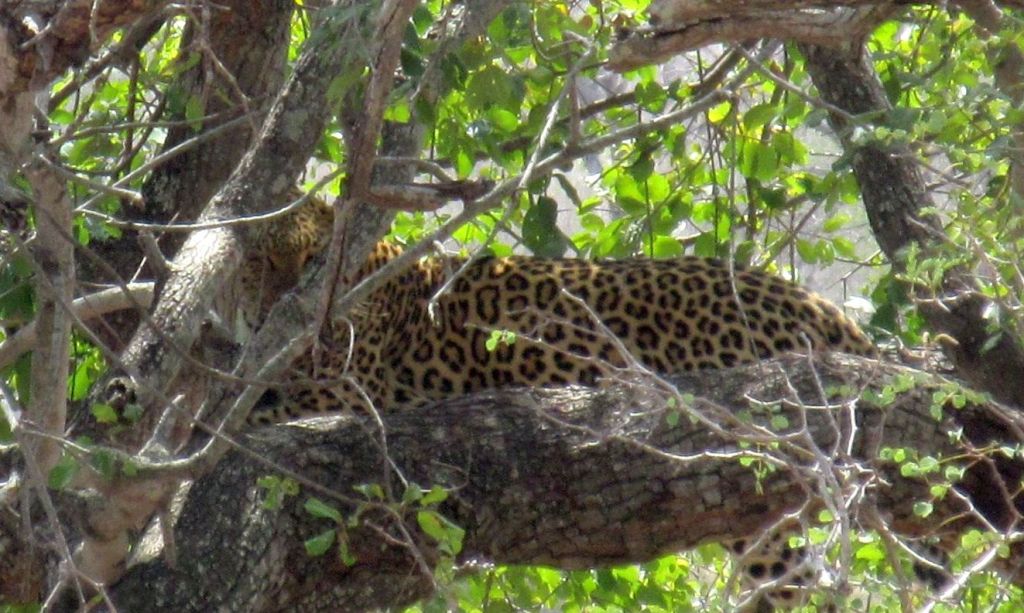
The only animal of the famous five that everybody hopes to see on African Safaris that we did not see on our first trip to Africa was a leopard. So, when Karelin’s niece, Cathy, put together a group to go to South Africa in 2016, we decided to go, hoping to see a leopard. We had seen lions, the elephants, the African buffaloes, and the rhinoceros.
Karelin and I took a flight from Dallas to New York to join Cathy’s Group coming from Pennsylvania. We went from Dulles Airport to Johannesburg, South Africa on South African Airways.
On September 3, after arriving at Johannesburg, we took another flight to Cape Town, which is South Africa’s oldest and most spectacular city. We stayed at the President Hotel where we enjoyed a welcome dinner and briefing about the trip.
Next day we witnessed the Key Ceremony at the Castle of Good Hope Fort. We rode a cable car to the top of Table Mountain for marvelous city and bay views. The weather could not have been better. We descended and traveled to the city, through the Malay Quarter and city center to photograph the impressive Mount from a distance. Later we departed from Victoria & Alfred Waterfront by ferry across Table Bay to Robben Island, the infamous home to the maximum-security prison where Nelson Mandela was jailed. We visit the prison and explored Murray’s Bay Harbor precinct before we returned to the waterfront by ferry.
Next day we had a full day excursion to Cape Peninsula beginning with a scenic drive passing mountains, coves, and beaches in route to Cape Point at the southern tip of the Peninsula. We stopped at the fishing village of Hout Bay before arriving at the Cape of Good Hope Nature Reserve. This reserve is rich with flora and fauna, and we saw baboons, rheboks, and Cape Mountain zebras. Then we continued along the coastline where the Atlantic and Indian Oceans meet. After lunch at a seafood restaurant, we followed the coastline along False Bay and stopped at Simon’s Town, to visit the penguin colony at Boulder Beach and the Simonstown Historical Naval Museum. It was so much fun to see the tiny penguins in the natural world and oblivious to our intrusion. We stopped to see a display of indigenous South African flora at Kirstenbosch Botanical Gardens. Finally, we rode the Cape Point funicular to observe the ocean and the famous lighthouse. At Cape Point both Karelin and I obtained a certificate for setting our foot in that famous cape. We returned to Cape Town late afternoon.
On day five of our tour, we visited a multifaceted outreach center which includes a soup kitchen and day care center, Philani, a Maternal, Child Health and Nutrition program for an underserved area of Cape Twon. Then we went to visit a local school. We were impressed with the kids in their classrooms and then their performance of traditional songs and dances. Then in the afternoon we went on an excursion to the beautiful wine region and culturally and historically significant Stellenbosch. This is a quaint town in the heart of this scenic region, filled with wineries. We walked through the town and explored the Cape’s Dutch architecture. We visited the Dutch Reform Moederkerk Church which is the second oldest congregation of the Dutch Reformed Church in South Africa. In the afternoon after lunch, we went to a wine tasting session at Neethlingshof wine estate and explored the grounds and gardens. Some people in the group purchased some local wines. The contrast between the shanty towns we saw in the morning and this beautiful pristine Dutch town was enormous.
That night we had an adventure! We went back to Langa, which we had visited in the morning, to have dinner at Mzanzi restaurant. This restaurant is operated and owned by a local South African couple, Nomonde and Vukile Siyaka. The tourism company that booked the trip told Cathy, the organizer of the trip, that the restaurant was not recommended because of the dangerous neighborhood! The bus we rented was carefully parked, and several neighbors stood guard to take care of the bus while we enjoyed our meal and the local band show. The owners were delightful. Both were Xhosa language speakers. The language is a Bantu language, indigenous to Southern Africa, and it has the heaviest functional load of click consonants in a Bantu language, 10% of basic vocabulary items contained a click. It was delightful to hear Nomonde speak some sentences in Xhosa to us. I took a video of her speaking her mother tongue language.
On September 7, we boarded a morning flight to Durban via Johannesburg. (All connections seem to go through Johannesburg.) Durban is on the west coast of South Africa. From there we continued to the resort village of Westbrooke and strolled on the golden sands of the Indian Ocean shoreline. After seeing the beach, we continued to the St. Lucia Estuary and took a boat cruise. We saw hippos, crocodiles, fish-eagles, herons, mangroves, kingfishers, mud skippers and others. Dancers greeted us when we disembarked from the boat. We arrived late at the Protea Hotel Umfolozi River near the Hluhluwe-Umfolozi Game Reserve, renowned for saving white rhinoceros.
Next morning we took pictures of the African Golden Weaver Bird nests on a tree right there at the Hotel. Then we drove to the Hluhluwe Game Reserve in Zululand. At this Reserve, we were loaded onto excellent safari vehicles for a game drive and saw warthogs, gazelles, lions, rhinos, African buffalos, greater blue-eared starlings (they have dark ear-patches and contrasting royal blue to violet flanks and belly), guinea fowl, lizards, zebras, sable antelopes, waterbuck antelopes, elephants, bongo antelopes, velvet monkeys, many other birds and giraffes. The we visited the Dumazulu Village where a Zulu warrior greeted us. We experienced everyday life of the Zulu tribe and witnessed traditional customs such as tribal dancing, spear making and a ceremony of beer drinking. We had a special Zulu lunch. Next, we made an extraordinary visit to Emdoneni Cat Rehabilitation Centre to view and photograph cheetahs, caracals, servals, and African wildcats which have a sandy grey fur, pale vertical stripes on the sides and around the face. We saw them being fed. I fell in love with all of them!
On September 9, our tour continued our scenic drive north and crossed the border into the tiny Kingdom of Swaziland. We had a marvelous visit at the market, and we made a new friend there. In one of the stores, we found a beautiful lady singing hymns to the Lord while weaving baskets, and a very tame and friendly African wildcat. We bought some African souvenirs there. That night we stayed at the Lugogo Sun Hotel in Lobamba, Swaziland. Today Swaziland is called Eswatini.
September 10 was a wonderful day for Karelin and me because we finally found leopards! We drove more than seven hours through the picturesque countryside to the world-famous Kruger National Park. This is South Africa’s premier game sanctuary. At Kruger, we saw more warthogs, rhinos, giraffes, bongos, some kind of deer, a gorgeous bateleur, and short-tailed eagle, with beautiful colors and a crown, a martial eagle, a leopard in distant rocks, zebras, elephants, velvet monkeys and African buffalos. We spent the night at the Kruger Gate Lodge and that night at dinner, I won a challenge by eating a well toasted Mopani worm, and I have a certificate to prove it. (However, it was not the first time I had eaten a worm because I had been before to a restaurant in Mexico City that specializes in worms.) We were stayed two nights at Kruger Gate Lodge with wonderful accommodations.
On September 11, we had two game drives and searched the park not only for the “Big Five”: lion, elephant, buffalo, rhino, and leopard, but also for all the game we could find. That day we saw more impalas with her distinctive number 111 markings on their rumps. We also saw baboons with their little babies, marabou stork, a hyaena feeding her babies, more giraffes, many kinds of birds, especially a Yellowbill Hornbill, a Southern Ground Hornbill, ostriches, and more blue starlings. We saw more velvet monkeys, crocodiles, kudus, zebras, and giraffes. At the end of the excursion, we finally spotted a leopard settling on the branch of a tree finishing his meal that he had caught during the night. That was the best close encounter we could have! By the time we left Kruger, we had seen four leopards! Sadly, during that time we were in Kruger, that part of the country was suffering a drought, and many animals were suffering or dying because of the lack of water.
Next day we left Kruger Park, drove through panoramic wild countryside, and enjoyed seeing forested mountains, valleys, rivers, and waterfalls. We drove through the Mpumalanga area and arrived at the Blyde River Canyon, one of Africa’s greatest spectacles, to admire the views there. Then proceeded to Bourke’s Luck Potholes, a place of African legend containing bizarre holes cut into rock by powerful river erosion. Later we stopped to admire views from God’s Window. We arrived at Sandton, a suburb of Johannesburg, known as the commerce-diamond mining center. We stayed at the Garden Court Sandton City Hotel.
Next day we went to learn more about apartheid at the Apartheid Museum. Also, we learned about South Africa’s turbulent past on a tour to Soweto which stands for “South Western Townships.” It was originally set aside by the South African white government for residences for Blacks. Soweto grew out of shantytowns and slums that arose with the arrival of black laborers from rural areas, in the period between World Wars I and II. In 1976, Soweto was the site of a massive uprising known as the Soweto Rebellion, which began as a protest against the government’s insistence that the Afrikaans language be used as the medium of instruction in Soweto’s high schools. Years of violence and repression followed. We saw Freedom Square and learned about the struggle for liberty. We learned more about Nelson Mandela and visited his former house. We also visited the Apartheid Museum, which exposes the rise and fall of apartheid and South Africa’s tumultuous journey thru the 20th Century. Today the situation in South Africa is dangerously close to those times again but kind of in reverse. That night we enjoyed a traditional South African buffet.
Our next adventure started with a transfer to the airport for a flight that took us to the Victoria Falls Airport in Zimbabwe. A lonely baboon was waiting for us on the other side of the fence at the Airport. From there we were escorted to our hotel. After resting a bit, we went to a Sundowner Cruise on the Zambezi River. This was the second time for Karelin and me since we had done a similar cruise in Zambia. But we marveled again seeing a lonely elephant that walked at the same pace as our boat navigated until he found his family on the river’s bank. The sunset was spectacular again. We stayed at the Victoria Falls Safari Lodge. Right there at the Hotel it was a wonderful baobab tree that we could admire at leisure.
Next day we proceeded to the Mosi-oa-Tunya Victoria Falls in Zimbabwe. This is the side I had been to before when I attended the United Bible Societies Conference at Victoria Falls. Victoria Falls are the “Eighth Wonder of the World,” so I did not mind visiting for the third time. However, this was an opportunity for Karelin and me to see the Statue of Dr David Livingstone, another thing we did not see on our first visit to Africa. After we walked forever to reach Number 14 stop or observatory at the Falls we went back, very tired, and we visited a craft village where we observed the traditional way of life and spent lots of money on wonderful souvenirs. On the road back to the hotel, we found friendly vervet monkeys.
In the afternoon, we went to see the “Feeding of the vultures” at our hotel. We really did not know that vultures are indeed an endangered species! They are critical to keeping the eco-system clean. By clearing away dead carcasses, they help to stop the spread of diseases like rabies, tuberculosis, and anthrax. When poachers kill elephants, they usually poison them, and that also kills the vultures, who eat the elephant meat after poachers get the tusk, thus killing the vultures too! So, as long as they keep allowing poachers in Africa, the vultures will become fewer and fewer.
The Victoria Falls Safari Lodge is trying to do something about this by collecting all the dining room scraps and feeding them to the vultures. It has become quite an attraction there. In front of the lodge’s Buffalo Bar, there is a viewing deck with concrete benches where you sit. First, there is a talk about the ecological importance of birds, and then the guide hauls out a sack, opens it in on the dirt right in front of us, and quickly runs away for his life! The sack holds the heads, feet and leftovers of beef, chickens, warthogs and whatever else the chefs of several restaurants around had left from their kitchens. The vultures then swoop in. Some have flown for miles around the lodge to get their meal. Some, as well as marabou storks, warthogs, were right there sitting and listening to the talk waiting for their meal. We saw some vultures with read heads, others with gray heads. The guide made clear to us that this is only a supplemental meal because they do not want them to die.
We also went to a “hide” to try to see animals up closer. It was a small little bunker disguised as a small dirt hill. It contained a couple benches and small slits for windows. We saw many squirrels, guinea fowl, a herd of impalas, doves, egrets, herons, and warthogs, of course. Our guide had a rifle with him, just in case!
On Friday September 16, we crossed the border to Botswana and visited Chobe National Park, one of the parks that has the largest population of elephants in the world, along with lions, hippos, and zebras. We also saw more impalas, kudus, bongos, the beautiful multicolor lilac breasted roller birds, and African geese. We rode safari jeeps and then embarked on a safari boat ride on the Chobe River to view the rich wildlife and numerous bird species in this amazing game reserve. After lunch, we enjoyed an afternoon game drive in an open safari vehicle. At some point there we crossed into the Namibia part of the Chobe Park. We returned to the hotel for a farewell banquet dinner with entertainment.
On September 17, we transferred to the airport for the return flight to Johannesburg. A six-hour airport layover allowed us to have lunch and do some last-minute shopping before connecting with our fifteen hour South Africa Airline flight back to USA.
Our South Africa adventure came to an end as we touched down in New York, flew to Chicago and then took another flight to Dallas to complete it.
We are certainly glad we did these trips when we did them, because right now in 2025 some of these countries are not safe enough to go to.
Psalm 91:1 “We who dwell in the shelter of the Most High, remain secure and at rest in the shadow of the Almighty [whose power no enemy can withstand].” (Psalm 91:1 – Amplified Bible” 2019)
 An Ear by Mistake
You must be logged in to post a comment.