
One of the trips both Karelin and I wanted to do was to Australia. We searched online and found a company called Go Ahead Tours that offered a pretty good itinerary to visit both Australia and New Zealand, a combined trip by air and land. We studied the possibilities and the excursions they offered, and we agreed on doing the trip starting on January 27, 2011, and ending on February 17, 2011. The tour was called ’22-Days Australia & New Zealand’.
First, we needed to obtain the Australian Electronic Travel Authorization (ETA). This is an electronic authorization that allows U.S. citizens and other eligible travelers to visit Australia for short-term stays. The ETA is mandatory for tourism, business visits, or short-term studies and is electronically linked to your passport, simplifying the travel process. We completed the application and paid $20 to obtain it.
When all trip payments were done, we obtained the final Itinerary details. It included 13 flights and many bus tours, but it changed during the tour.
We departed on January 27 from Dallas to Los Angeles and then from Los Angeles to Brisbane, Australia.
In flight, we crossed the International Date Line and, as the brochure of Go-Ahead Tours put it, we “lost a day”. From Brisbane, we immediately, on January 29th, continued on a flight to Cairns in the Great Barrier Reef State of Queensland, Australia.
A Go Ahead representative greeted us at the airport and escorted us to the Rydges Esplanade Resort Hotel. We were to spend the next three nights there. On the way to the hotel, we realized we were in a tropical paradise. We rested that day trying to recover the night sleep we had lost. I do not remember if we went for dinner that night, but I think we went down to the dining room just to meet our fellow travelers.
Next morning we got one of the highlights of our stay in Cairns–a boat ride with Sunlovers Reef Cruises to the Great Barrier Reef, the world’s largest coral reef system, featuring over 2,900 individual reefs and 900 islands. Since we would have an opportunity to go snorkeling and view the colors of the barrier reef from the underwater observatory, we wore our swimming suits. They said we would enjoy lunch, but the adventure had a twist. The boat ride is about one and a half hours from Cairns. As soon as we got on the boat, they offered us anti-sea-seasickness tablets, and we saw stacks of suspicious white bags like the ones on the airplanes. Our boat had to cross the path constantly used by large, ocean-going container ships, and this part of the trip out was extremely rough. (Also, there was a hurricane forming not too far from us.) Nearly everyone succumbed to the effects, Karelin included! But the boat’s staff expertly, quickly, and discreetly took care of each incident! Since I was used to the rough seas around Chiloe Island in Chile, I did not suffer any effects and enjoyed the trip and snorkeling. Unfortunately, I could not take pictures of the coral reef and sadly enough, since it was a cloudy day, they looked quite brownish instead of the colors they had promised. The glass bottom of the boat allowed us to see some moon jellies and multiple varieties of fish.
Next day we took a trip to Kuranda Village and Rainforest. This was a fascinating excursion that took us deep into the heart of a tropical rainforest near the top of a mountain. We took the Cairns Scenic Railway at Freshwater Station. On the way, we saw numerous waterfalls, and the landscape going up was very beautiful. At Kuranda, we saw butterflies galore, crocodiles, lizards, turtles and koalas! We could not resist the temptation, and we took pictures holding a darling koala. Then we continued to see wallabies, kangaroos, all kinds of parrots and snakes. We had free time for lunch and browsed in the markets of Kuranda. We rode the Skyrail, the Rainforest Cableway, over the treetops with magnificent views of rivers and lakes. We had brief stops at Barron Falls and we saw the Red Peak Mountain, almost 2000 feet high. Back in Cairns we went for dinner at the Villa Romana Trattoria. We also heard that the cyclone was headed for us!
On February 1, we boarded our fourth plane on this trip, bound for the very center of the Australian continent, Alice Springs and the Australian Outback. We would spend two nights there. Upon arrival, we checked into All Seasons Oasis Hotel in Alice Springs and had a splendid “parrillada” style diner.
That night we also learned that the severe tropical cyclone, Yasi, a powerful and destructive tropical cyclone, had hit Cairns during the evening of January 30. Yasi deepened rapidly over the next 24 hours and was classified as a category 5 cyclone. We missed it by only a few hours!
Next day we joined an Aboriginal Dreamtime excursion, held just a short distance from Alice Springs, in Red Bush country. We learned about Aboriginal spiritual beliefs, mythology and music. It was fascinating to learn about kinship and arranged marriage customs among aboriginals. I also tried some roasted lizards. I tried both boomerang throwing and playing the didgeridoo!
Then we enjoyed a comprehensive tour of Alice Springs. We visited the Royal Flying Doctors Service facilities. This is an aeromedical service in Australia that provides emergency medical transport and primary health care to people in rural and remote areas. It was established in 1928 and is the largest service of its kind in the world. We also did a tour of The Alice Springs School of the Air, a distance education organization in Australia that provides teaching and educational resources to children living in remote areas of the Northern Territory. It began in 1951 and uses radio and online technology to connect students with teachers. After that we went to the Alice Springs Telegraph Station established in 1872. It is a historic site in the Northern Territory of Australia. It served as a key communication link between Darwin and Adelaide. We went for dinner at the infamous Bojangles Saloon in Alice Springs, created in 1935. The toilet seats had razor blades on them!
On February 3, we took a tour of a camel farm. Camels? In the Australian outback?? Of course, the camels are not indigenous to Australia. We learned that the feral camels in Australia are descendants of dromedaries imported in the 19th century from India and Afghanistan, for help in laying the telegraph line and train tracks across the outback, and for exploration and transport. After using them in railway construction, the camel caretaker was told to kill them, but he felt pity and let the animals free. This was in the early 20th century. They rapidly prospered and multiplied, and now they number over a million. I had the opportunity to ride a Camel. It was nice and smooth. Kangaroos, ostriches and a beautiful little lizard also greeted us there.
In the afternoon, we journeyed by motorcoach through the desert outback to the breathtaking Uluru National Park, where we spend the night. Upon arrival, a guided sightseeing tour introduced us to the Olgas, a cluster of towering rock domes. That night, after a wonderful cocktail with champagne, enjoying the view of Ayers Rock at a distance, we stayed at the Outback Pioneer Hotel.
On February 4, we visited the magnificent Ayers Rock, located nearly 900 miles from the nearest city. It is in the heart of the Australian outback and close to the Tropic of Capricorn. On our guided sightseeing tour, we learned about the rock’s history. For thousands of years, native Aboriginal tribes have worshipped this dramatic monolith, which they call Uluru. It is sacred to them and we were admonished to treat it with respect.
Following our visit to the rock we boarded a flight to Melbourne where we were going to stay for three nights at the Rydges Melbourne Hotel.
Next day, February 5, we took a tour of Melbourne. The city (pronounced something like “Melbuhn” by Aussies) is a beautiful, diverse, down-to-earth exhibit of 19th-century architecture, trams, sprawling parks and charming suburbs. On our guided tour of the city, we saw Flinders Street Station (meeting point for Melburians), South Bank, Tudor-influenced Cooks’ Cottage in Fitzroy Gardens (residence of Captain Cook’s parents before it was moved to Australia from Yorkshire, England), St. Paul’s Cathedral, Town Hall, the Melbourne Cricket Ground and Melbourne Park, setting for tennis’ annual Australian Open. We also had a brief stop at the market. That evening, we traveled to nearby Phillip Island for the nightly “Penguin Parade” on Summerland Beach. They say that thousands of tiny penguins waddle up from the sea to nest but unfortunately, we could not see them at all. The instructions in English were to keep total silence for the little guys to come but a group of Chinese tourists of probably more than 200 was there that night and they kept talking and laughing. The penguins did not appear.
Next morning we went to Dandenong Ranges National Park. There we saw cockatoos that came to perch on our shoulders and arms. We saw wallabies, and various bird species. It was a great spot for birdwatching and observing native animals. From there we saw the beautiful Yarra Valley and Melbourne skyline. The Dandenong Ranges are also home to beautiful gardens, such as the Alfred Nicholas Gardens and the National Rhododendron Gardens, which showcase a variety of plant species. In the afternoon we took a steam train and winery excursion to the Yarra Valley, where we tasted the excellent wines of the region. We were at Domain Chandon, a subsidiary of Moët & Chandon that specializes in sparkling wines. We bought some glasses there for souvenirs.
Next day we boarded our flight to Sydney, host of the summer 2000 Olympic Games. The first thing that got our attention was the Sydney Opera House in the harbor. After transferring to our hotel, the Rydges World Square, we took an optional cruise of famous Sydney Harbor.
Sydney’s harbor is considered the most beautiful natural harbor in the world, but we have seen many of those in our travels. We had dinner onboard the ship.
In our guided sightseeing tour, we learned about the convicted criminals who arrived here in the late 18th century to become Australia’s first European settlers. We passed by Chinatown and the grand public buildings on Macquarie Street. We saw Darling Harbor, the Rocks and world-famous Bondi Beach.
On February 9, we were on our own. We went to the harbor, took a hop-on-hop-off tour of the city, visited the Sea Life Sydney Aquarium; we saw people climbing the Sydney Harbor Bridge, we met some interesting characters enjoying the view, and we talked about our computer-related jobs as missionaries. Then we visited the inside of the Opera House for a guided tour.
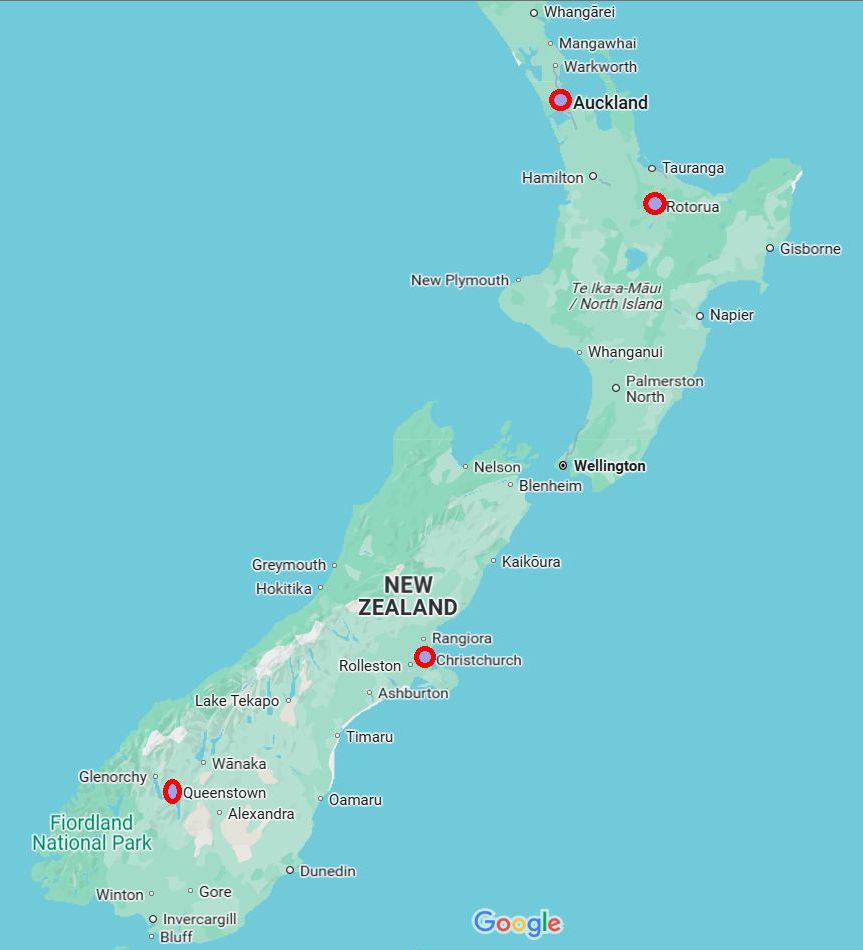
We departed Australia that morning by plane and touched down in Christchurch, New Zealand. We were would stay at Rydges Christchurch Hotel for two nights.
On February 10, we enjoyed a sightseeing tour of New Zealand’s “Garden City”, Christchurch. We saw the award-winning gardens, modern buildings, Cathedral Square, the city’s first European settlement, the University of Canterbury and Hagley Park. Then we traveled along the Summit Road to the Sign of Takahe, an historic roadhouse. After the tour, we had free time to go see kiwis at the Southern Encounters Aquarium and Kiwi house in Cathedral Square. ‘Kiwi’ can refer to a fruit, a specific native bird, or to a New Zealander! The endangered kiwi bird only comes out at night so their enclosure at the Kiwi House was set in a large darkened room with red lights so you could see them in the dark. That night we enjoyed a special opportunity to become acquainted with some “Kiwis” (New Zealanders) over a home-hosted dinner with a local family. Our hosts were delightful. They had a gorgeous house up in the hills and they prepared the famous New Zealand Pavlova (A Meringue Dessert Topped with Fruit) for us with kiwi and blueberries.
Next day we traveled by motor coach for more than six hours from Christchurch to Queenstown, through some of New Zealand’s most captivating vistas. We passed through the Canterbury Plains and the sheep-farming region around Ashburton. We traveled through Burton’s Pass into the high Mackenzie Country. We stopped at the Tin Shed for rest and after passing beautiful Lake Tekapo, we followed the Kawarau River into Queenstown. We especially enjoyed this drive knowing that most of the movie, The Lord of the Rings, was filmed in this area. At Queenstown we stayed for 3 nights at the Rydges Lakeland Resort Hotel.
We spent a free morning in Queenstown and then we took the Gondola Aerial Cableway 1,500 feet up Bob’s Peak. We overlooked beautiful lakes and mountain scenery. That evening, we choose to do a steamship ride across Lake Wakatipu to visit the Walter Peak Sheep and Cattle Station. We saw sheep being sheered, a sheepdog demonstration and we enjoyed a typical local dinner at the Homestead Restaurant.
Next day we departed early for a full-day excursion to see the breathtaking scenery of Milford Sound. The journey took us to the Five Rivers farming region and around the shores of Te Anau Lake and into Fjord country. After climbing to the Homer Saddle (in the bus) and driving through the Homer Tunnel, we followed the beautiful Cleddau River into Milford Sound. On arrival, we boarded a boat for a cruise around the Sound. They told us the fjord was created during the Ice Age. We traveled around the fjord out into the sea between native forests and cliffs. The view of the mile-high Mitre Peak is truly unforgettable. When we arrived back at Queenstown, I could not but miss the lakes in the south of Chile that are so like this part of New Zealand.
We flew next morning to Rotorua in the heart of the North Island’s Maori country. We would stay at the Sudima Hotel Lake Rotorua for one night. Here we were at Maori Village where we admired the beautifully carved arches and houses and powerful dancers, boasting many tattoos, wide-open eyes and extended tongues. During the haka dance, they do this to create an intimidating appearance, which symbolizes their ferocity and strength. Maori ancestors are venerated. They were originally from Eastern Polynesian culture. That evening, we feasted having a bountiful Maori Hangi Feast with our fellow travelers.
Next day, before we left Rotorua, we had the opportunity to see some of the beautiful black swans from that region. We continued to Auckland on a motor coach, enjoying the landscape and a relaxed drive of a little more than 3 hours. We stayed at the Rydges Auckland Hotel for one night.
We began the next day with a sightseeing tour of Auckland, the City of Sails, built upon two natural harbors, the Waitemata and the Manukau. We saw a great vista of the cityscape and harbors from atop the volcanic slopes of Mount Eden.
We left on February 17, 2011, at 6:35 a.m. from Auckland to Los Angeles and from Los Angeles to Dallas. We arrived home on February 17, 2011, at 23:10 p.m. On our flight home, by recrossing the International Date Line, we reclaimed the day we lost coming to Australia.
Five days after we arrived in Dallas, we learned that a major earthquake occurred in Christchurch on Tuesday, February 22, 2011, at 12:51 p.m. local time. The 6.2 earthquake struck the Canterbury Region in the South Island, centered 6.7 kilometers south-east of the central business district. It caused widespread damage across Christchurch, killing 185 people in New Zealand’s fifth-deadliest disaster. We were very concerned about the people who had hosted us for dinner at Christchurch. We contacted them and we learned they had only lost a piece of their external fence at their house. I also emailed the people we met at the Southern Encounters Aquarium and Kiwi House to inquire about the wellbeing of the kiwis. They were nice enough to inform me that the kiwis were safe and that had been transferred to a zoo in the north of New Zealand.
This is the least of the flights and bus trips we did during this tour.
- Dallas – Los Angeles
- Los Angeles – Brisbane
- Brisbane – Cairns
- Cairns – Alice Springs
- Ayers Rock – Sydney
- Sydney – Melbourne
- Melbourne – Sydney
- Sydney – Christchurch
- Christchurch – Queenstown by bus
- Queenstown – Rotorua
- Rotorua – Auckland by bus
- Auckland – Los Angeles
- Los Angeles – Dallas
What a trip! We were trusting in our favorite Scriptures when we travel.
Psalm 121: 7-8
The Lord will protect you from all evil;
He will keep your life.
The Lord will guard your going out and your coming in [everything that you do]
From this time forth and forever.
(“Bible Gateway Passage: Psalm 121:7-8 – Amplified Bible” 2019)
 An Ear by Mistake
You must be logged in to post a comment.