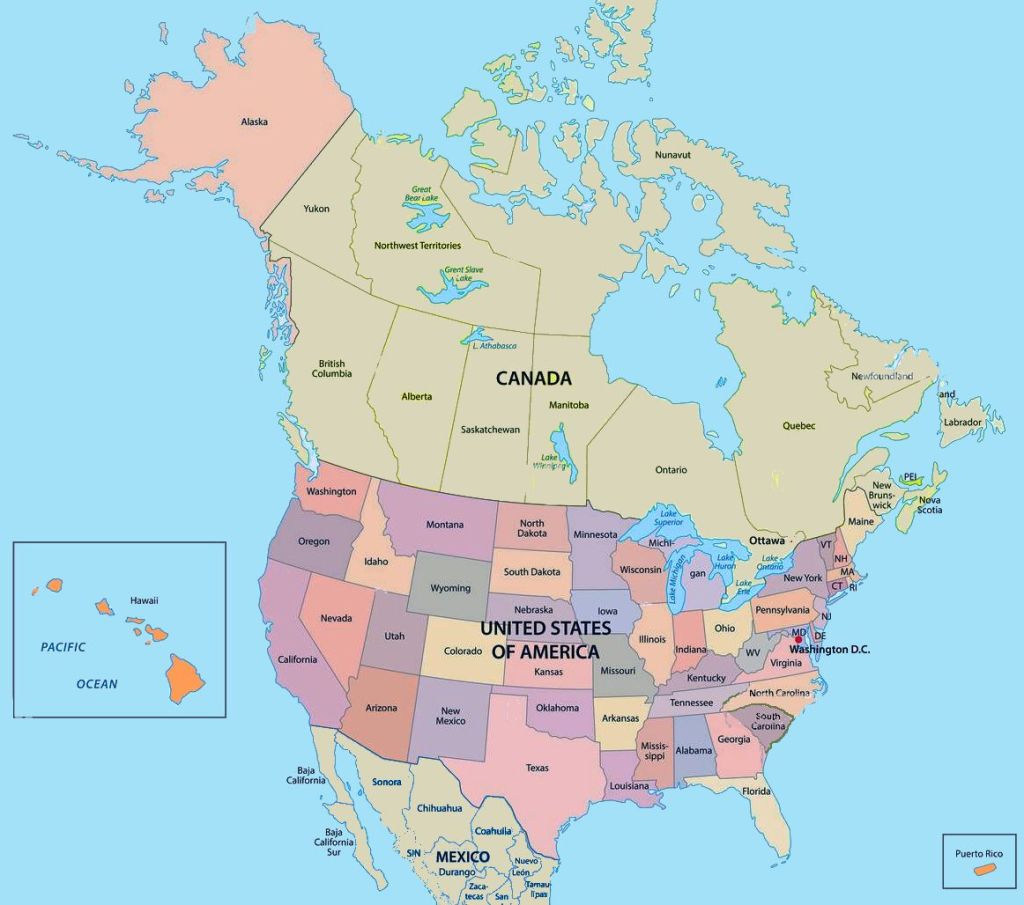
So far, Karelin and I have been in thirty-nine of the fifty states in United States plus Washington, DC and Puerto Rico. Most of these we have done either by car or by bus but some also by cruises. We are only missing Indiana, Iowa, Kansas, Nebraska, New Hampshire, New Jersey, New Mexico (we already have booked a trip there), Rhode Island and Vermont.
Before starting to travel with Karelin, I had been by myself to Georgia, Florida, Texas, California, Louisiana, Mississippi, Alabama, North and South Carolina, Connecticut, Massachusetts, Minnesota, Illinois, New Hampshire, New Mexico, New York, Ohio, Vermont and Washington, DC, where I went with my parents to see the Smithsonian Museum and visit the main historical places there. When we went to the Capitol, we did not have any problems visiting but there was a lot of security in that place. We had to wait and they checked everybody in the line. That is why I think the lack of security on January 6th, 2021, was intentionally planned.
While we were still working, Karelin and I used to attend conferences related to our jobs. In 1997, she came from Dallas, and I came from Miami to attend Elliott Masie’s first computer conference. It was called “Computer Training & Support.” It gathered computer trainers and tech professionals to prepare the workforce for a computer-rich environment. In 1994, we went to the International Society for Technology in Education (ISTE) Conference held in Denver Colorado. We also attended the ISTE Conference in Madison, Wisconsin in 1998. We attended several other conferences related to computers, training and education during the 90’s, and not only those but we attended the Computer Technical Conference (CTC) organized every year by the Summer Institute of Linguistics (SIL) and the Jungle Aviation and Radio Services (JAARS), both affiliated organizations of Wycliffe Bible Translators. After each conference we would together explore the area around the cities were we or travel by car to other places. One year, we traveled from Waxhaw, North Carolina, where JAARS is located, to Miami, stopping in several places on the road, including St. Augustine and Daytona Beach in Florida.
In 2005 Karelin organized a trip to Palo Duro Canyon State Park near Amarillo located in the Texas Panhandle. The Panhandle is a square-shaped area bordered by New Mexico to the west and Oklahoma to the north and east. I’m replicating here what Karelin wrote about that trip.
- July 1st, 2005. “Leave Grand Prairie about 9a.m. 350 miles to Amarillo. Time permitting, 18 miles outside of Amarillo, we may turn south on 207 for a scenic drive in Palo Duro Canyon; cross over to I-27 & up to Amarillo. This was an almost 100 mi. detour, but I think it was worth it. The land appears completely flat until you come over what looks like a slight rise and then you suddenly drop into the canyon. I think you could just drive down 207 to the canyon and then retrace your steps in half the mileage of the total detour, but the detour brings you into Amarillo on I-27.
- Sat. July 2 Scenic drive on 136/293 to town of Panhandle. Interesting but not my definition of scenic.
See Square House Museum ($?). Tiny town with several adjacent museum & restored buildings. Very nicely done and well worth seeing. Contents covering lots of different topics. Donation only.
207 to Borger. See Hutchinson County Historical Museum ($?)
Small town museum—only worth the time if you happen to be there anyway. They had a quilt exhibit while we were there and that was the best part but it was only temporary.
Scenic drive (136/1319/687) to Stinnett. Interesting but not my definition of scenic. See Isaac McCormick Pioneer Cottage ($?) Not restored—forget it! Retrace path or 207/136 to Fitch. See Lake Meredith Aquatic & Wildlife Museum ($?) Nice dioramas—but small—nice gift store. Lake Meredith National Recreation Area ($?) So-so. Barbeque dinner 6:30 ($6.50) [reservations made] hamburger! LoneStar Rising (in outdoor ampitheatre overlooking Lake Meredith) ($12) [reservations made]
Lots of dancing, bright costumes, needs work—actors/singers didn’t have mikes; performance needed lots of polishing. 136 back to Amarillo. - Sun. July 3 1061/385 to Cal Farley’s Boys Ranch. See ranch. Boot Hill Cemetery. Julian Bivins Museum.
Nice church service at 11:00 Sun.—visitors welcome—come as you are; beautiful campus; good (free) van tour of campus/facilities; nice gift shop; mice little museum.
385 to Vega. See Dot’s Mini Museum. Magnolia Station. Oldham County Heritage Farm & Ranch Museum Not too impressed with Dot’s Mini Museum; Magnolia Station & Oldham County Heritage Farm & Ranch museum: not spectacular but interesting—outside.
I-40 to Amarillo. See Cadillac Ranch on the way. Worth the drive-by because it’s there, but nothing spectacular.
American Quarter Horse Heritage Center & Museum ($3.50). Very nice, worth seeing. We were short on time—could have spent more time there. Nice gift store. - Mon. July 4 I-27/217 to Elkins Ranch (outside of Canyon). Cowboy Morning Breakfast (8:00 breakfast & entertainment) ($20) [purchased–KS] Outstanding! From parking lot we were taken by jeep to site. Good food; good entertainment; good interaction with audience; nice view of canyon.
Elkins Ranch Jeep Tour of Palo Duro Canyon ($11.50) We took 1 hr. tour. Good tour of canyon. Guide entertains with history and tales. Lots of opportunities to get out of Jeep and look around and take pictures.
Drive into Canyon (very short distance) Panhandle Plains Historical Museum ($7) On campus of West Texas A&M. Very nice museum and gift store. We could have spent much more time there.
Capturing Western Legends Exhibit (Russell & Remington) ($15) Temporary exhibit—not as impressive as I had hoped.
Spend afternoon in Palo Duro State Park ($3) Very nice gift shop and trading post. Nice drive on road that loops through the canyon.
Cattle Call Barbeque (before musical) ($8.50) [purchased–KS] Very nice facilities; good barbeque dinner.
Texas Legacies (musical) ($17.15) [purchased–KS] Great amphitheater and sound; canyon wall as backdrop; excellent performance. Would go see it again in a heartbeat! Nice gift shop.
Return to Amarillo. - Tues. July 5 Drive to Grand Prairie. On the way back, 6 miles east of Claude, turn right on County Road 21; then left on India. Look on right side for area where earth is somewhat piled up (like forming the side of a small pond). This is where the 30 ‘ crack opened up in the ground!
Alternate plan for one of above days: spend day at Bar H Dude Ranch ($29)
Estimated Expensed For Suggested Itinerary (with 4 people)
$25 gas
50 food (could be reduced)
120 attractions (could be reduced)
$195 total”
It was a really fun trip with two of our friends. We stayed in two different houses that belonged to people on the hospitality roster of Wycliffe Associates. At the house we stayed we had to take care of two big black dogs. We mainly feed them because they had houses on the patio of the house. I was quite pleased wit the Texas Legacies Musical show!
In 2008, we treated ourselves with a trip to Crested Butte, Colorado, but I’ve written about it separately under the title ‘Dog Sled Ride.‘
Next, we took a cruise/tour to Alaska in May of that same year. It was on the MS Zaandam from Holland America. We did it because we had done a cruise in South America the year before and Karelin, after seeing the glaciers in Chile, wanted me to see them in Alaska. We departed from Vancouver where we briefly visited with a couple of friends who lived there. Bernardo was an anthropologist from Chile who had to leave, like me, after the military coup in 1973. He was a professor at Simon Fraser University. I had taken some courses with him when he was teaching at the University of Texas in Austin.
From Vancouver, our ship took us first to Ketchikan where we took a tour of the place and then saw a show of lumberjacks throwing axes and rolling logs. Then at Juneau, we toured the place, went whale watching, saw the Mendenhall Glacier and enjoyed an Alaska Salmon bake. At Skagway, we went around the place and stopped at the Red Onion Saloon. (Skagway played a significant role during the Klondike Gold Rush in the late 1890s.) We also saw the Yukon Route Railroad.
We navigated the Glacier Bay National Park and Preserve and saw impressive scenes of glaciers, icebergs, otters, and seals. We took pictures at College Fjord and Alyeska at Girdwood Prince William Sound Glacier. In Seward, we went to the Alaska Sealife Center and also saw Portage Glacier.
We disembarked at Anchorage, took the Alaska Explorer Train and stayed in Denali Park. There we saw the most marvelous amount of wildlife. A mama bear with two little ones, black-tailed deer, hares, partridges, mountain goats, fox, owls, Harlequin ducks, porcupines, moose. We flew over Mt. McKinney or Denali in a small plane. We went to see Jeff King’s Iditarod dogs and kennels.
In Fairbanks, we took a van tour to see more wildlife and then visited with friends of Karelin, Crystal, Murry, and Missy, the cat, that went with us by car all the way to the Artic Circle. Missy had been trained to walk on a leash and to travel well. We flew back from Fairbanks to Seattle and then to Dallas.
During this cruise/tour, seeing the beauty of the glaciers and Karelin admiring these marvels, the Lord gave me an inspiration. I suggested to my friend that since my mother had moved to a nursing home, and I had two empty bedrooms, she could think about moving in with me and rent her townhouse so we could keep traveling. Now we know that was the Lord’s plan for us.
Then in October, we drove to North Carolina. We drove through Louisiana, Mississippi, stopped overnight in Alabama, continued through Georgia, South Carolina and then, North Carolina. After some days there, we continued to Williamsburg and Virginia Beach, Virginia, and crossed to Maryland and Delaware to get to Pennsylvania. We spent some days staying with Karelin’s niece, Cathy, and exploring southeastern Pennsylvania and the beautiful fall foliage.
We returned home enjoying the autumn beauty of the Blue Ridge Parkway which begins at Rockfish Gap, Virginia, and connects to Skyline Drive in Shenandoah National Park. It ends at U.S. Route 441 in Cherokee, North Carolina, near the Great Smoky Mountains National Park. The Blue Ridge Parkway is 469 miles long.
In April 2009, we took a cruise to Hawaii. We flew some days before so we could stay in a hotel in Waikiki Beach. We rented a car and spent some time with Karelin’s niece and family there. Then we took the cruise with Norwegian’s ship, Pride of America. We visited four islands of Hawaii. We were in Honolulu on Oahu, Hilo and Kona on the ‘big’ island of Hawaii, Kahului on the island of Maui, and Nawiliwili on Kauai.
I particularly liked the sea food and the beaches. My favorite tour was the tour, On Road to Hana, on the Hana Highway in Maui. It is a scenic 64.4 mi. drive on Maui, famous for its lush rainforests, waterfalls, and dramatic ocean views. The journey features over six hundred curves and fifty-nine bridges. We got a certificate for doing it. We also bought some coffee in Kona.
In 2009, we flew twice to Las Vegas, Nevada. We also returned to North Carolina, and in November we went to Puerto Rico.
In December 2009 we drove to Branson, Missouri, and Oklahoma. In Branson, we navigated with ‘Ride The Ducks’ and the Branson Belle Showboat on the Table Rock Lake. We saw the show ‘Noah’ at the Sight & Sound Theater and on the way back we went to Hot Springs in the Ouachita Mountains in Arkansas where we took a dip in a thermal spring pool.
In January 2010, we drove to Florida, stopped in Orlando and then continued to Fort Lauderdale for a cruise to Bahamas. In June, we drove back to Oklahoma.
In June 2011, we drove back to Missouri and Oklahoma. In August we flew to Las Vegas, Nevada, and in December we went to San Antonio to enjoy Christmas around the Paseo del Rio.
In 2012, we booked a program with Road Scholar in February, to go to the Texas Cowboys Poetry Gathering in Alpine, Texas. We drove to Fort Davis in West Texas, where we visited the McDonald Observatory, with advanced telescopes, including the Hobby-Eberly Telescope. Then we went to Sul Ross State University in Alpine where the annual Lone Star Cowboy Poetry Gathering takes place. We thoroughly enjoyed it.
In April 2012, we went with a group of members of our Travel Club on another Road Scholar program to see the Biltmore Estate in Ashville, North Carolina. I had been there before, but it was fun seeing how much it had changed for the better. The Biltmore is a historic house. It is the largest privately owned home in the U.S. It was built in 1889 by George Washington Vanderbilt II. The property has 8,000 acres of beautiful grounds.
In May 2012, we did a bus tour by Cosmos Tours entitled “National Parks & Canyon Country with Little Bighorn.” We departed from Denver and traveled north to Cheyenne, Wy. We saw the Black Hills of South Dakota and continued to Custer, SD. Then, we saw the Crazy Horse Memorial, a monument carved out of a mountain that pays respect to the great Native American hero, Chief Crazy Horse. We continued to Mount Rushmore, a monument to four American presidents: Washington, Jefferson, Lincoln, and Roosevelt. Afterward, we visited Tatanka: The Story of the Bison and the Lakota people. Continued to Deadwood, a lawless frontier town during the 1876 Gold Rush. We stayed there for the night. This is the Wild West where we heard the legends of Calamity Jane and Seth Bullock.
Next afternoon we visited the Little Bighorn Battlefield National Monument. It commemorates the battle of the Little Bighorn, which took place on June 25-26, 1876. At the Battlefield, we heard the story of the leader of the Sioux, Crazy Horse, and about the defeat of Lieutenant Colonel George Armstrong Custer and the US Seventh Cavalry by Lakota (Sioux), Cheyenne, and Arapaho warriors. We spent the night in the town of Sheridan located in the Bighorn Mountains, Wyoming.
Next morning we went to Buffalos Bill’s frontier town of Cody. We had a fun time at the Buffalo Bill Historic Centre, home to five unique museums including the Whitney Gallery of Western Art, the Plains Indians Museum, Cody Firearms Museum, and the Buffalo Bill Museum.
We continued through Shoshone National Forest to Yellowstone National Park, still in Wyoming. We traveled along Grand Loop Road to Artist Point with views of Yellowstone Canyon and the Lower Falls. Here we saw a bear right next to our window on the bus.
We saw the bubbling geyser basins and waited for the consistent “blow” of Old Faithful, Yellowstone’s most famous geyser. We spent the night in Yellowstone National Park.
We then headed south into the Grand Teton National Park in Idaho. Its 13,770-foot-high ridges were crested with snow. We walked along the shores of the glacier-fed Jenny Lake and ended the day in all-Western Jackson, Wyoming. That evening we joined a barbecue cookout and Wild West show.
After another day in Jackson the bus continued to Salt Lake City in Utah, for an overnight stay. This is the center of the Mormon Church. It is set on the edge of the Great Salt Lake Desert. We took a walk around the city. We did not visit the Mormon Tabernacle, and the Beehive House.
We continued to Bryce Canyon National Park, Utah. It is twenty miles of sandstone cliffs and ever-changing colors. We saw the famous rocks sculpted by nature into pillars called “hoodoos.”
Next, we traveled to Zion National Park, still in Utah. We walked through steep canyons, stone towers, and beautiful vegetation. Then we headed east into Page on the shores of Lake Powell, a large reservoir located on the Colorado River, between Utah and Arizona. It was created by the construction of the Glen Canyon Dam in 1960. It covers approximately 162,000 acres and has a shoreline of about 2,000 miles. We enjoyed walking on the rock tunnels around the Lake.
Then we crossed the Painted Desert and Kaibab National Forest to arrive for an overnight at the South Rim of Grand Canyon National Park in Arizona. We went to see the sunset at Hopi Point in Grand Canyon. After another day in Grand Canyon, we continued to Las Vegas and were taken to McCarran International Airport to return to Dallas.
Also in 2012, Karelin and I spent some days in Washington DC right after our trip to Iceland. We took the Hop-on-hop-off bus around the whole city, we saw the Washington Monument, Lincoln Memorial, Jefferson Memorial, and the Vietnam Veterans Memorial, all located primarily along the National Mall. We saw the buildings of the Smithsonian, and we regret we did not have enough time to visit. But we took some time visiting the National Museum of the American Indian.
In January 2013, we drove to Houston, Corpus Christi and to San Antonio. We spent some time at the Aransas National Wildlife Refuge.
In August 2013 we went to Houston and continued to see the Schulenberg Painted Churches. This is a collection of stunning churches that highlight the rich cultural heritage of Czech and German immigrants who settled in the area during the late 1800s and early 1900s. They are renowned for their interiors adorned with intricate artwork and vibrant colors. We also visited the community of The Wends of Texas. This is a group that descended from Sorbian immigrants who arrived in Texas in 1854 seeking religious freedom. They primarily settled in areas like Serbin and Giddings, where they have preserved their unique culture and traditions, including the annual Wendish Festival.
In December 2013 we drove to Biloxi, Mississippi to explore the area.
In July 2014 we went to Marksville, Louisiana, on a bus from the Grand Prairie Senior Center, The Summit.
In September 2014 we took another Road Scholar tour in California. Sequoia/Kings Canyon, Yosemite, Lassen, Lake Tahoe, Mono Lake, Carson City.
We flew to San Francisco and stayed at the Hilton San Francisco Airport Bayfront Hotel. Next day we boarded the bus to Fresno. Our first stop was a guided visit to the Mission and State Park at San Juan Bautista. This mission was one of four established in the summer of 1797 and the fifteenth of the twenty-one missions in Alta, California. We continued with a stop at San Luis Reservoir, beginning our exploration of water issues in California. The dam was constructed as a storage reservoir for the federal Central Valley Project and the California State Water Project. It stores runoff water from the Delta that would otherwise flow into the ocean.
Next day we went to Sequoia/Kings Canyon National Parks. In Sequoia we visited the General Sherman Tree and Grant Grove. Sequoia was established on September 25, 1890. It is 404,063 acres and contains the highest point in the lower forty-eight states, Mount Whitney at 14,505 ft. The park is south of and contiguous with Kings Canyon National Park where we went in the afternoon. I was happy to see lots of chipmunks and a black bear of about 2 years old.
Next, we continued to Yosemite National Park. That day we had lunch at the historic Wawona Hotel. The Wawona Hotel is a National Historic Landmark, Victorian-style lodge in Yosemite. We visited the Pioneer Village History Center near Wawona Hotel. This ‘village’ is assembled from structures that were originally found in various locations throughout the park and moved to Wawona in the 1950’s and sixties. Each building represents a different chapter in Yosemite’s story. We continued to Yosemite Valley with a stop at Tunnel View that offers views of El Capitan, a granite monolith about 3,000 feet high. On its tallest face is a world-famous location for mountain wall climbing. We also saw the Half Dome, and the Bridalveil Falls.
Next morning we stopped at El Capitan Meadow and went to the base of the Bridalveil Fall of 620 feet high. We rode Yosemite Valley Shuttle to eat at the Yosemite Lodge at the Falls Mountain Room. We also stopped by the Visitor’s Center, Yosemite Museum, and the Ansel Adams Gallery.
Next day we went to Yosemite’s high country over Tioga Pass, 9,943 ft. high. This is the eastern entrance to Yosemite National Park. It is the highest highway pass in California and in the Sierra Nevada. Then we stopped at Tenaya Lake. We continued through Tuolumne Meadows, along the Tuolumne River. In the afternoon we visited Mono Lake, an oasis in the dry Great Basin and a vital habitat for millions of migratory and nesting birds. Mono Lake is unique. It is old and one of the few continuously existing lakes on the continent.
Then we continued to Carson City, Nevada’s territorial and state capital. Carson City was founded as a community in 1858, seven years after the first settlement of Eagle Station trading post in 1851. Carson City is named for the famous frontiersman and scout Christopher “Kit” Carson.
Next, we visited the Nevada State Museum which was originally erected in 1870 as the U.S. Mint and coined more than $49,000,000 until 1893. Then we went to Virginia City, NV, famous for its mining industry of gold and silver. We visited the Fourth Ward School, an 1876 Victorian school building.
Next, we headed for Lake Tahoe Basin. We came to Taylor Creek to observe the Taylor Creek Stream Chamber and to visit the Mt. Tallac Historic Site. We had lunch at Zephyr Cove, on board the Dixie Queen for a buffet lunch. At this point Karelin said she was not feeling very well, and we thought it was dinner that day.
Next was Lassen National Park known for its volcanic geology. We stopped at the Loomis Museum for a ranger lecture and to view exhibits. B.F. Loomis documented Lassen Peak’s most recent eruption cycle and promoted the park’s establishment.
At this point Karelin was feeling bad. Since that night we were going to be at a hotel in Redding, CA, Karelin decided she should go to the hospital emergency room. It was determined that she did need surgery so the tour group continued without us the next day. I stayed with her until she was ready to travel and we returned home. (That’s why we always get trip insurance!)
Our next big cruise was in April of 2016. I am including this cruise here because Hawaii was one of the islands we were going to visit. The cruise “30-day Circle Hawaii, Tahiti & Marquesas” was with Holland America’s ship the MS Westerdam. It departed from and returned to San Diego, California.
We flew to San Diego and then from San Diego to Honolulu, Hawaii, we spent 4 days at sea. We spent 2 days in Honolulu, Oahu, then went to Hilo on the Island of Hawaii, then Kona also on Hawaii Island. Then we spent another two days at sea. On April 12, we crossed the International Date Line and on April 15 we cruised the Equator.
On April 17, we were supposed to visit Rarotonga in the Cook Islands, but the sea was so rough that we could not use the tenders. Only one tender was sent with the gifts we were taking for the children at that Island.
After another day at sea, we arrived at Raiatea in the Society Islands, a part of French Polynesia. We continued to Moorea in the same Society Islands. There we found beautiful jewelry made of seashells and we saw beautiful pictures by the French painter Paul Gaugin.
Then Bora Bora where we stayed for two days and we enjoy swimming with manta rays and meeting the locals. Of course, we visited the Bloody Mary bar made famous by the movie “South Pacific.”
On April 22, we docked in Papeete, Tahiti, also in the Society Islands. We spent two days there and enjoyed visiting the Papeete Market for local crafts and fresh produce. We explored the historic Notre Dame Cathedral and enjoyed a stroll in the beautiful Paofai Gardens along the waterfront.
Then we continued to Nuku Hiva in the Marquesas Islands where we visited the Craft Market and enjoyed taking pictures of this beautiful island.
That night we enjoyed a big show on the ship. Other seven days at sea, and we came back to San Diego California and then flew home.
In August 2016, we went to San Antonio for a Convention of the Red Hatters with the group we belonged to in Grand Prairie, the Sassy Jewels.
In 2018 we went to the Texas Hill Country. We went to see a contest at a Fredericksburg Vineyard for the best imitation of Lucille Ball stomping grapes in a comedic scene from “I Love Lucy.” What fun!
Also, in September 2018, we took another tour with Road Scholar. We drove to Joplin, MO, and then to St Charles, where we stayed from September 9 to 13, to attend the lectures and tours of the RS program entitled: “Mighty Waters and Quaint Towns on the Mississippi and Missouri Rivers.” We enjoyed visiting Herman, St. Genevieve which is the oldest town in Missouri, and Hannibal. We learned about Lewis and Clark who began their famous expedition near St. Charles. We visited the Daniel Boone Homestead, stopped in Hannibal to study more about Mark Twain and his childhood in that area, and we ended the program at the Lewis and Clark Boathouse and Museum.
Then we drove to Fenton, MO, to visit the Joyce Meyer headquarters, and then we drove to Branson, MO, where we enjoyed several activities, and the Sound & Sound production of ‘Samson’. We continued through Eureka Springs to see the 48 ft. tall Thorncrown Chapel, containing 6,000 sq. ft. of glass, located on Hwy 62 West. (Since it opened in 1980, there have been over 7million visitors.) Then we visited the Walmart Museum in Bentonville, Arkansas, and indulged in some of their yummy homemade ice cream at the attached soda fountain!
In June 2019 we went back to Houston and Galveston in Texas.
In September/October 2019, we did another Road Scholar trip. The “Cumberland Falls and Traditions, Legends and Music of Appalachia” program.
On September 22, we drove to Little Rock, Arkansas and continued next day to Nashville, Tennessee. Next day we drove to Erlanger and Williamstown in Kentucky where we stayed to visit the Creation Museum and the Ark Museum. We enjoyed both places tremendously.
We continued to Lexington, Kentucky, where we took time for a horse farm tour, bourbon distillery visit, and the Kentucky Horserace Park. We also went to the Doll House Museum and the Shaker Village of Pleasant Hill where we had a wonderful time visiting houses and venues and hearing about the Shakers.
Then we drove to Corbin, Kentucky, to start the program with Road Scholars. As a part of that program, we visited Cumberland Falls State Resort Park, located in Kentucky’s Daniel Boone National Forest and known for its waterfall and the unique moonbow phenomenon, a rainbow created by moonlight, but it was not the time of the year to see it. We also saw the scenic Laurel Lake.
After the program finished, we drove to Conway, Arkansas and then to Lawton, OK, to attend Karelin’s 60th High School Reunion.
In November 2019, we went to Branson MO by bus, with the Celebration Senior Travel. An excellent group to travel with since they pamper you and take care of all the details of the trip.
During 2020, like the rest of the world, all the trips we had already booked were cancelled because of COVID so we had no choice but to ‘hunker down’ like the rest of the world, absurd as we thought that to be.
In 2021, we took a trip with AMTRAK Vacations. We flew to Chicago where we stayed 2 days at the Drake Hotel and took a tour of the city on the Big Bus. We went to the Chicago River Walk, Willis Tower, and Skydeck (a 110-story, 1,451-foot skyscraper in the Loop community area), the Millennium Park, Hilton Chicago and Grand Park, the Adler Planetarium, Navy Pier, the Art Institute of Chicago, and the Magnificent Mile. We also took a scenic boat ride on the Chicago River, where we learned about the incredible architecture of Chicago.
We took the AMTRAK train overnight to Glacier National Park and arrived there on July 30. (We had our first experience at sleeping on pull-down bunks in a train roomette.) At Glacier Park we stayed at the Glacier Park Lodge, which is a work of art with enormous logs. The AMTRAK tour included a roundtrip Shuttle Transportation for a Two Medicine Valley Boat Cruise and a Big Sky Circle Tour which is an 8-hour sightseeing tour in Glacier National Park that includes a drive over Marias Pass, wildlife viewing, and stops at scenic locations like Lake McDonald Lodge and Logan Pass. We enjoyed learning about the Blackfeet indigenous group in that area.
Next day we continued on the AMTRAK train overnight to Seattle (again staying in a roomette) arriving there on July 31. We stayed at the Cowne Plaza Hotel in downtown. We were distressed at the enormous number of homeless people living in tents right next to the beautiful buildings like the library in the middle of downtown. We took a tour of Seattle and went to eat seafood at The Seattle Waterfront which is a picturesque area along the Puget Sound. We went to the top of the Space Needle, standing 605 feet tall. We took the elevator to the observation deck for panoramic views of the city and Mount Rainier. We also visited the Chihuly Garden & Glass exhibit. We did not go to the Pike Market because the time was short. We flew back to Dallas on July 5, 2021. Our favorite parts of this trip were Chicago and Glacier Park. The AMTRAK roomette would probably have been considered ‘fun’ if we were about 30 years younger!
In November 2021 we did a cruise on the Lower Mississippi with American Queen Voyages. (This company was later purchase by American Cruise Line.) Our ship was the American Duchess. We flew to New Orleans, where we stayed for one night at the Hilton New Orleans Riverside. There we were tested for COVID and authorized to embark. We boarded that afternoon and did the safety drill.
The cruise turned out to be a little different from the advertised itinerary mainly because of the situation with COVID and lack of personnel in many of the places we were supposed to visit.
Our first stop was at Nottoway, Louisiana, where we visited the Nottoway Plantation, the largest antebellum mansion in the South, featuring stunning architecture. completed in 1859. It boasts an impressive 53,000 sq. ft. of living space, featuring sixty-four rooms, seven staircases, and five galleries. The mansion architecture is a blend of Greek Revival and Italianate styles, making it a fascinating study in historical architecture.
Then we continued to Pointe Coupe Parish still in Louisiana. There we visited the parish seat, New Roads, which is known for its charming downtown. We also visited the Atchafalaya National Heritage Area and the St. Mary’s of False River Church.
Then we went to Natchez where we did the most delightful tour of the whole cruise. The tour was called “A Jeweled Christmas in Natchez” at The Towers in Natchez, Mississippi. This is a unique holiday event featuring thousands of pieces of vintage costume jewelry displayed in an elegantly restored antebellum mansion. This event runs from November 18 to December 31. We were there on December 2nd, 2021. The couple who own the mansion are most entertaining and delightful hosts.
We continued to Vicksburg, Mississippi, known for its strategic location on the Mississippi River and its significant role during the American Civil War, particularly the Siege of Vicksburg in 1863. There we visited the Episcopal Church of the Holy Trinity; the Vicksburg Riverfront Murals and we went around downtown.
Then at Tunica, Mississippi, we went to the Blues Museum. It highlights the history and evolution of blues music through interactive exhibits, artifacts, and a recording studio. It is located on Highway 61, known as the “Blues Highway,” and is a key attraction for music lovers.
The cruise ended in Memphis, Tennessee. Here we went to Beale Street, which is famous for its live music scene, particularly blues. We did not walk the two miles of this historic street lined with clubs, restaurants, and shops but we saw statues of Elvis Presley, B.B. King, and Johnny Cash.
We flew back from Memphis to Dallas.
From 2021 to 2024 we did more trips to Branson with Celebration Senior Travel. We went to Waco in 2022 to see Magnolia Market at the Silos and toured several houses Chip and Joanna Gaines, from the TV show “Fixer Upper,” had restored.
In 2023 we did the cruise on the Great Lakes with Viking that I described in another segment.
Then in April 2024 we took another tour with Celebration Senior Travel to Fredericksburg in Texas. We went to Enchanted Rock and took a Wildflower Tour. We had dinner at the Ausländer German restaurant. We saw the historic area of the city. We ate at the Arch Ray Resort and Winery. We did a winery tour and had a Chuckwagon BBQ dinner right there at the back patio in our hotel.
In July 2024 we took an Alaska Train trip also with Celebration. We flew to Anchorage, stayed in a hotel there, and took daily train trips to Spencer Glacier Whistle Stop for a glacier-viewing “float” trip; to Seward to explore the Kenai Fjords National Park area, where we navigated the Resurrection Bay and saw the Aialik glacier and diverse marine wildlife such as whales, sea lions, and puffins; and to Fairbanks where we spent a couple nights, visited again with Karelin’s friends, Crystal and Murray, and took the Riverboat Discovery on the Chena and Tanana rivers. Then we took another train back to Anchorage and from there we flew home.
In October 2024, we took a cruise with American Cruse Lines on the Columbia and Snake Rivers. We flew to Lewiston, Idaho, where we stayed for a night. Next day before the cruise, we had a fascinating talk by a member of the Nez Perce tribe. We embarked at Clarkston, Washington, on the American Pride paddleboat. That night we had our first lecture about the Lewis and Clark expedition. The reason for taking this cruise was that we had seen the starting point of the expedition at Camp Dubois near St. Louis in Missouri when we had been in that area with a Road Scholar tour. (The expedition was a significant journey by Captain Meriwether Lewis and Second Lieutenant William Clark from 1804 to 1806. It was commissioned by President Thomas Jefferson following the Louisiana Purchase in 1803, with the goal of exploring the newly acquired territory and finding a possible route to the Pacific Ocean. They successfully mapped significant portions of the western United States and gathered extensive scientific and geographical information. They did not discover an all-water Northwest Passage.)
Our first stop was at Richland, Washington, where we visited the REACH Museum. Then we stopped at Stevenson, WA, and saw the Bonneville Lock & Dam, that was the first federal lock and dam on the Columbia River, completed in 1938.
Next day we went to Astoria, Oregon, located in the northwest corner of the state on the south bank of the Columbia River, near where it flows into the Pacific Ocean. There we went to visit Fort Clatsop, the encampment of the Lewis and Clark Expedition in the Oregon Country near the mouth of the Columbia River during the winter of 1805–1806. Here we also visited a house of interesting Queen Anne architecture.
Next day we went back on the river and stopped at Kalama, Washington. There we took a bus to see Mt. St. Helens. We visited the Science and Learning Center where we saw the whole history of the eruption and what happened to the area after it.
Next day we went back to Portland, Oregon, where we had an exceedingly difficult disembarkation because the ship docked next to a park. The ship was low and connected to the higher part in the park by metal ramps. We had to wait more than an hour in the rain to be taken by golf cart on top of the ramps in quite precarious conditions.
In November 2024, we went again to Branson MO with Celebration Senior Travel. In Branson, as usual, we saw several shows, enjoying our stay at the Chateau on the Lake Resort at Table Rock Lake. This time we also spent a day at Silver Dollar City, a theme park with lots of stage shows and other attractions.
In March 2025 we did a cruise on the East coast of United Sates with American Cruise Line.
This time we flew to Jacksonville, Florida, where we stayed for one night at the Hyatt Regency. To our surprise, the ship, the American Eagle which is a catamaran, was docked right in front of the hotel. We embarked next day and navigated right in front of Amelia Island in Florida.
After a day of navigation, we arrived at Brunswick, Georgia, and then we continued for about one hour to Jekyll Island. I had been there before in 1967, invited by the Rotary Club of Atlanta Georgia when they granted me my scholarship and I was studying at the University of Georgia in Athens. At that time, we had lodged at the then Jekyll Island Club Resort, which had been an exclusive winter retreat for America’s wealthiest families. We toured the island on a tram and saw all the mansions there built by millionaires.
Next day in Savanah, Georgia, we took the trolley for a tour around the city. That afternoon we visited the American Prohibition Museum. This is the only museum in the U.S. dedicated to the history of Prohibition. It had interactive exhibits on the era’s culture. It includes speakeasies and stories about gangsters.
Then we continued to Hilton Head Island in South Carolina where we took a boat ride in search of dolphins. We didn’t see many.
Then we arrived in Beaufort, SC, and visited Port Royal where we had a docent who guided us through the area and told us about Gullah history. Port Royal was a center for the Reconstruction Era after the Civil War, where freed slaves began to establish their communities. The area is known for its unique Gullah culture, with its own distinct language, cuisine, and rich traditions that have been preserved by the descendants of those who were enslaved there.
We also took a delightful horse carriage ride in Beaufort. We had a narrated tour about the town’s rich history and beautiful architecture.
Next day we arrived at Charleston, SC where despite the rain we had a good tour of the city, and we went to Boone Hall Plantation. This is a historic plantation located in Mount Pleasant, South Carolina. It was established in 1681. We walked at the Avenue of Oaks and learned about the life of enslaved African Americans who worked there. We had a wonderful presentation by a storyteller named Veronica Gaillard who told us about the rich history and culture of the Gullah people.
Next day we were transported to the airport and flew back to Dallas from Charleston, South Carolina.
That was the last trip we have done so far in the United States, but they are many more still waiting for us.
 An Ear by Mistake
You must be logged in to post a comment.